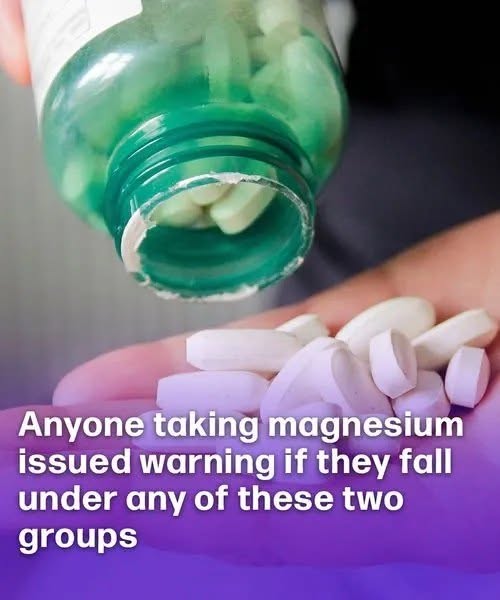
That headline (“Health experts issue new warning about magnesium supplements…”) is typically clickbait based on a real but narrow medical caution, not a new global ban or emergency.
The concern around Magnesium is mainly about specific high-risk people, not healthy users taking normal doses.
⚠️ The TWO main high-risk groups
1) People with kidney disease
This is the most important group.
If someone has Chronic kidney disease, their body may not remove excess magnesium properly.
What can happen if magnesium builds up:
- Low blood pressure
- Weakness and fatigue
- Nausea
- Slow heartbeat
- Confusion (in severe cases)
👉 This is called hypermagnesemia (too much magnesium in blood).
2) People overusing magnesium products (stacking)
Risk increases if someone combines:
- Magnesium tablets
- Magnesium antacids (for heartburn)
- Magnesium laxatives
- Multivitamins containing magnesium
Why this matters:
- Intake can quietly become too high
- Side effects are more likely with long-term overuse
🧠 What most headlines don’t explain
For healthy people with normal kidneys:
- Magnesium is usually safe in recommended doses
- It’s an essential mineral for muscles, nerves, and heart rhythm
- Problems are rare and usually involve excess intake or medical conditions
💊 Common safe-use guidance
- Stick to recommended daily supplement doses unless prescribed
- Don’t combine multiple magnesium products unnecessarily
- Take spacing advice seriously with certain medications (like some antibiotics and thyroid meds)
🚩 When to be cautious
Talk to a doctor if:
- You have kidney disease
- You’re taking multiple supplements daily
- You feel unusual weakness, dizziness, or very low blood pressure
🧭 Bottom line
The real message behind the headline is:
Magnesium is safe for most people, but can become risky in kidney disease or excessive supplementation.
If you want, I can check your specific magnesium type (glycinate, citrate, oxide, etc.) and tell you which one is safest and best absorbed.