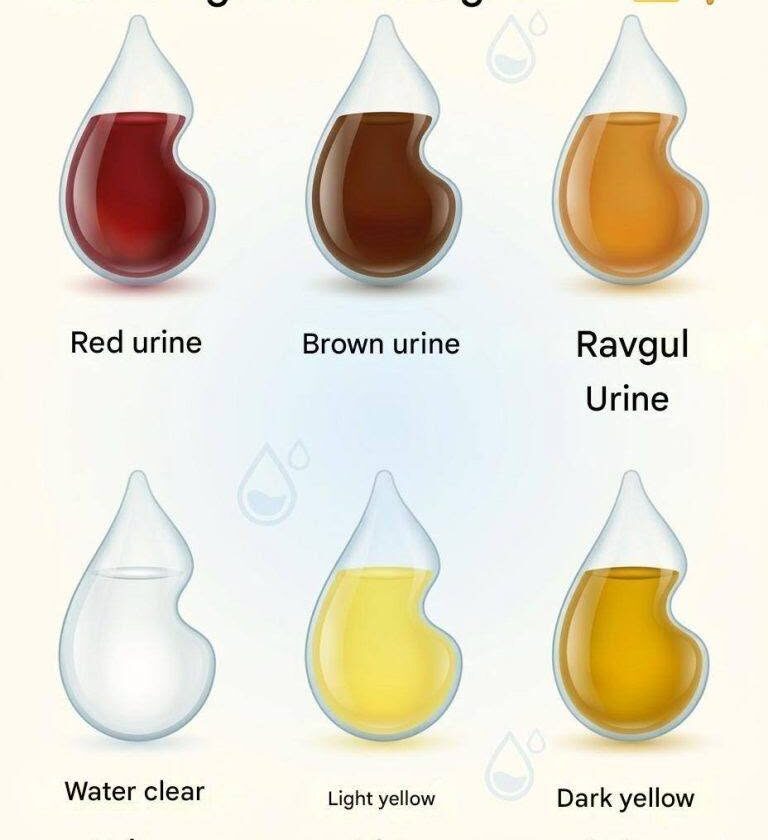
What Does the Color of Your Urine Say About Your Health?
Urine color can provide clues about hydration, diet, medications, and sometimes health conditions. It is not a diagnosis by itself, but noticeable or persistent changes can be worth paying attention to.
🟡 Pale yellow (often normal)
- Usually indicates good hydration.
- This is the typical color many healthcare professionals consider a sign of adequate fluid intake.
🟨 Dark yellow or amber
- Often means your urine is more concentrated and you may need more fluids.
- It can happen after sweating, exercise, or not drinking enough water.
💧 Completely clear urine
- May mean you are very well hydrated.
- If it is consistently clear and you are drinking excessive amounts of water, you may be overhydrating.
🟠 Orange urine
Possible causes include:
- Dehydration
- Certain medications or supplements
- Some foods with strong pigments
If it persists or occurs with symptoms like abdominal pain or yellowing of the skin/eyes, seek medical advice.
🔴 Pink or red urine
Possible causes include:
- Beets or certain foods
- Blood in the urine (which can come from infections, kidney stones, or other urinary tract issues)
Blood in urine should generally be checked by a healthcare professional, especially if it is unexplained.
🟤 Brown or tea-colored urine
Possible causes include:
- Severe dehydration
- Certain medications or foods
- Muscle injury causing release of muscle proteins
- Liver or bile-related problems
🟢 Blue or green urine
This can sometimes occur from:
- Food dyes
- Certain medications
- Rarely, infections or medical conditions
⚪ Cloudy urine
May be related to:
- Dehydration
- Urinary tract infection (UTI)
- Kidney stones
- Other urinary changes
Possible accompanying symptoms like burning, urgency, fever, or pelvic pain are important.