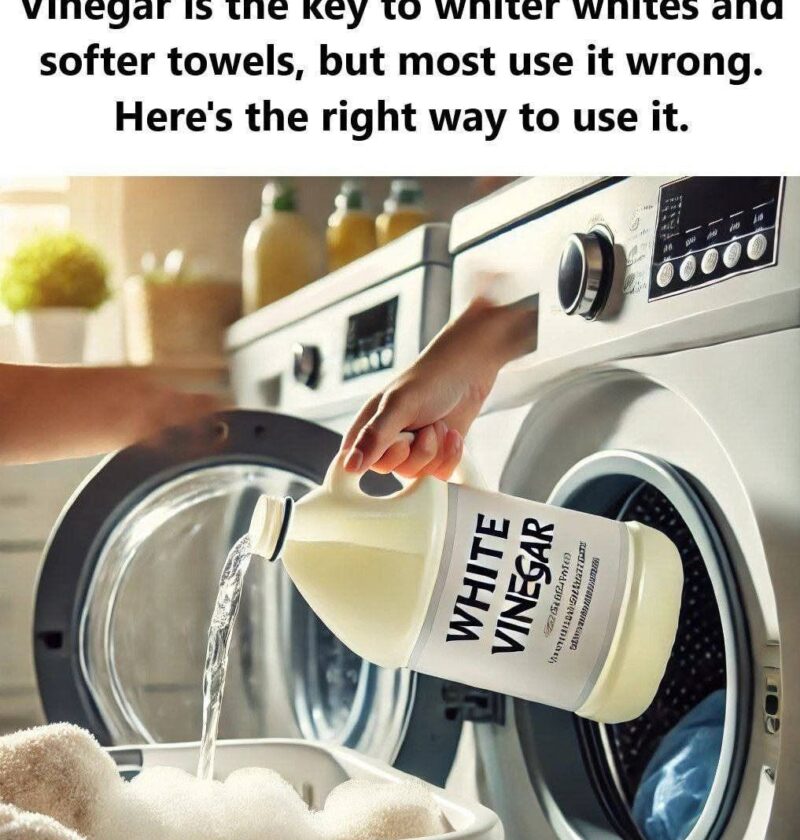
Vinegar can be a helpful laundry addition, especially for softer towels and fresher-smelling clothes, but it is not a miracle whitening agent. Its main benefit is that the mild acidity of white vinegar can help break down detergent residue, mineral buildup, and some odors that make fabrics feel stiff or look dull.
The right way to use vinegar in laundry
🧺 For softer towels
- Add ½ to 1 cup of white distilled vinegar to your washing machine’s fabric softener dispenser.
- Run your normal wash cycle.
- Dry towels completely.
This can help remove leftover detergent and fabric-softener buildup, which often makes towels less absorbent.
🤍 For brighter whites
- Add vinegar during the rinse cycle to help remove residue that can make whites look gray or dull.
- For tough stains or heavily yellowed whites, a dedicated stain remover or oxygen bleach may work better than vinegar alone.
Common mistakes to avoid
❌ Don’t mix vinegar with chlorine bleach. This can create dangerous chlorine gas.
❌ Don’t use vinegar as a replacement for detergent. It does not remove body oils and dirt the way detergent does.
❌ Don’t overuse it on delicate fabrics. Some materials may be sensitive to repeated acid exposure.
Extra laundry tips
- Use the correct amount of detergent—too much can leave buildup.
- Avoid overloading the washer so water can rinse fabrics properly.
- Skip fabric softener on towels; it can coat fibers and reduce absorbency.
Used correctly, white vinegar can be a simple way to help towels feel fresher and softer without relying on heavy fabric-softener buildup.