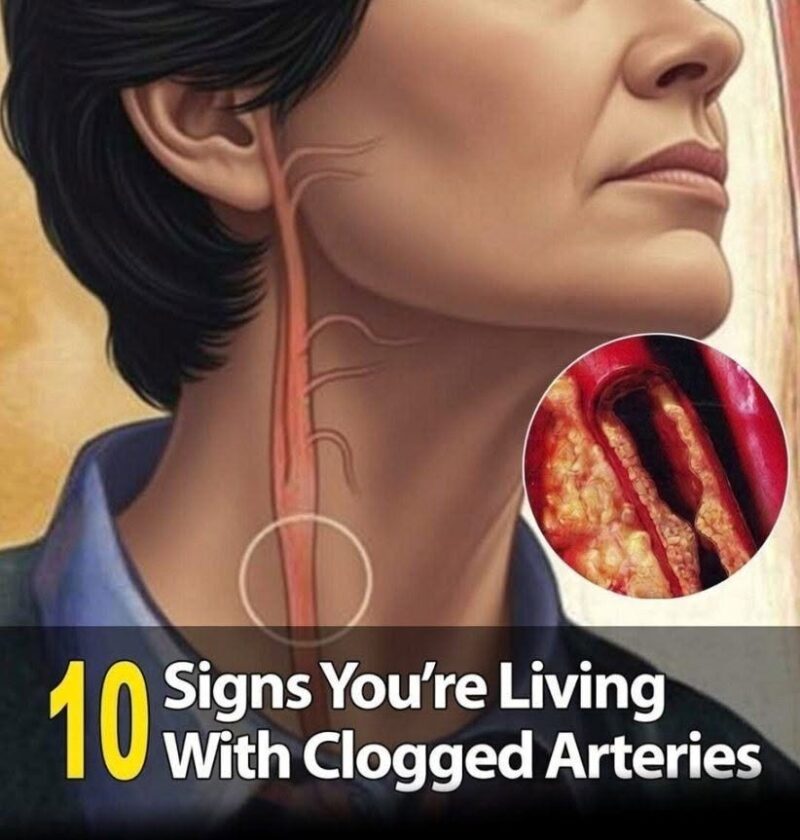
Blocked arteries usually develop due to atherosclerosis, where fatty deposits narrow blood vessels and reduce blood flow. The symptoms depend on which arteries are affected, but they often show up gradually.
Here are 10 important indicators of blocked arteries you should not ignore:
1. Chest pain or pressure (angina)
- Tightness, heaviness, or squeezing in the chest
- Often triggered by walking, stress, or climbing stairs
- May improve with rest
This can suggest Coronary Artery Disease
2. Shortness of breath
- Feeling breathless during light activity or even at rest
- Happens because the heart is not getting enough oxygen
3. Pain in legs while walking (claudication)
- Cramping or burning pain in calves or thighs
- Improves when you stop walking
Often linked to Peripheral Artery Disease
4. Numbness or weakness in limbs
- Reduced blood flow to arms or legs
- Can feel like heaviness or fatigue in muscles
5. Cold hands or feet
- One limb feels noticeably colder than the other
- Indicates reduced circulation
6. Slow-healing wounds
- Cuts or sores on legs/feet take a long time to heal
- Poor blood supply delays tissue repair
7. Erectile dysfunction (in men)
- Early warning sign of narrowed blood vessels
- Often appears before heart symptoms
8. Dizziness or lightheadedness
- Reduced blood flow to the brain
- Can occur with severe narrowing in major arteries
9. Vision problems or sudden vision loss
- Blurred or partial vision loss in one eye
- May indicate carotid artery blockage
Related to Carotid Artery Disease
10. Sudden neurological symptoms (emergency sign)
- Face drooping
- Slurred speech
- Arm weakness
This may indicate Stroke or a mini-stroke (TIA) and needs urgent care.
Important reality check
Blocked arteries usually develop silently over years. Symptoms often appear when:
narrowing becomes significant or blood flow is critically reduced
That’s why many people only find out after a heart attack or stroke.
When to seek urgent help
Go to emergency care immediately if you have:
- Chest pain lasting more than a few minutes
- Sudden weakness on one side of the body
- Severe shortness of breath
- Fainting or confusion
Bottom line
Blocked arteries don’t usually cause one clear symptom—they create a pattern of reduced blood flow in different parts of the body.
If you want, I can also explain:
- Early warning signs that appear 5–10 years before a heart attack
- Or how to naturally slow plaque buildup with diet and lifestyle changes (evidence-based, not myths)