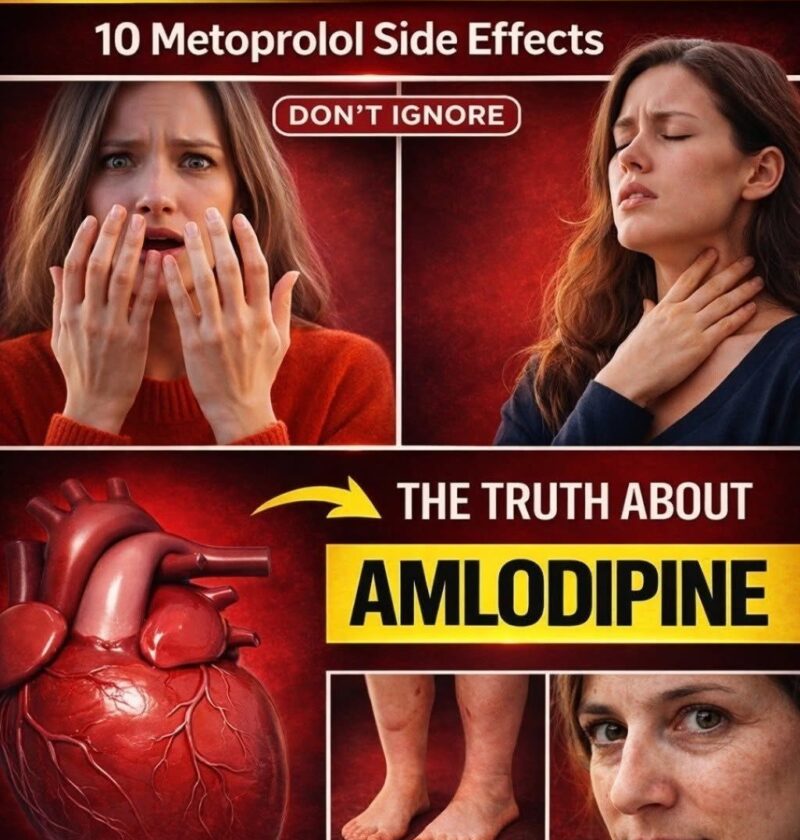
That headline is pure clickbait. There is nothing a doctor is “praying you don’t discover.” What they usually mean is: Metoprolol has known side effects, most are mild, and a few are important to recognize early.
Let’s break it down clearly and honestly.
🫀 Common side effects (fairly frequent, usually mild)
These are the ones many people notice at the start:
- Fatigue or low energy
- Dizziness (especially when standing up)
- Slower heart rate
- Cold hands and feet
- Mild nausea or stomach upset
- Sleep disturbances or vivid dreams
These often improve as the body adjusts.
⚠️ Less common but important side effects
🫀 Too-slow heart rate (bradycardia)
- Feeling unusually weak or lightheaded
- Fainting in severe cases
🩸 Low blood pressure
- Dizziness
- Blurred vision
- Feeling faint when standing
😴 Mood changes
Some people report:
- Depression
- Low motivation
- Feeling emotionally “flat”
Not everyone experiences this, but it’s worth monitoring.
🫁 Breathing issues (important in some patients)
- Shortness of breath or wheezing
- More likely in people with asthma or COPD
🚨 Rare but serious side effects
Seek medical attention if you notice:
- Chest pain or worsening heart symptoms
- Severe shortness of breath
- Very slow pulse with fainting
- Swelling of legs or sudden weight gain (fluid retention)
🧠 Important reality check
Metoprolol is widely prescribed because it:
- Lowers risk of heart attack and stroke
- Controls irregular heart rhythms
- Helps heart failure in many patients
- Is generally well-studied and safe when monitored
Most people tolerate it well, especially at the right dose.
🧾 Bottom line
The “hidden scary side effects” claims online are exaggerated. The real story is:
- Most side effects are manageable
- Serious ones are rare and usually predictable
- Benefits for heart health often outweigh risks
If you want, I can also explain how metoprolol differs from other blood pressure medicines or how to tell if a symptom is from the drug or something else.