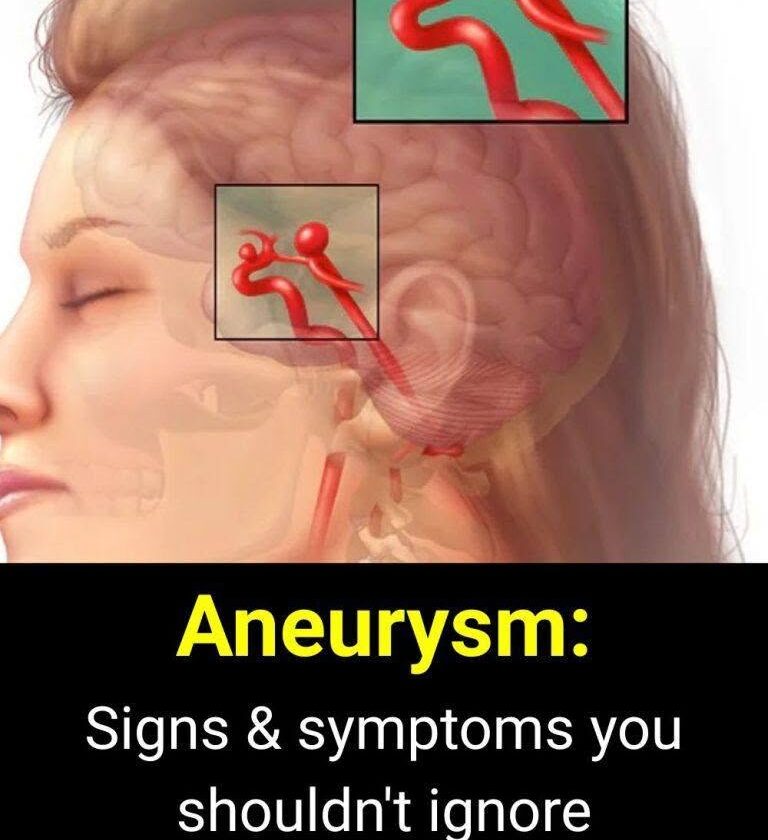
A “silent aneurysm” usually refers to a brain aneurysm that develops without symptoms until it becomes large or ruptures. Most are discovered by accident during scans for unrelated issues.
A brain aneurysm is a weak, bulging spot in a blood vessel in the brain. Over time, it can expand and, in some cases, rupture—leading to bleeding in or around the brain.
This condition is related to Cerebral aneurysm.
🧠 Why some aneurysms stay “silent”
1) They are small and stable
Most aneurysms remain tiny and don’t press on nearby brain structures.
Result: No pain, no warning signs.
2) The brain has no pain sensors inside its tissue
The brain itself doesn’t feel pain—only blood vessels and surrounding membranes do.
Result: Aneurysms can grow unnoticed.
3) Slow development over years
They often form gradually due to long-term vessel wall weakness.
Result: The body adapts without obvious symptoms.
4) Location matters
Some aneurysms sit in areas that don’t affect nerves or vision until they become large.
5) Symptoms (if they appear) are vague
When symptoms do show up, they may be subtle:
- mild headaches
- blurred vision
- pressure behind the eye
- slight facial numbness
These are often ignored or mistaken for common issues.
⚠️ When an aneurysm becomes dangerous
A rupture leads to bleeding in the brain (subarachnoid hemorrhage), a medical emergency.
Warning signs may include:
- sudden “worst headache of life”
- neck stiffness
- vomiting
- loss of consciousness
- vision or speech problems
This is linked to a life-threatening form of Stroke.
🧬 Risk factors
Silent aneurysms are more likely with:
- high blood pressure
- smoking
- family history
- aging
- certain connective tissue disorders
🧠 Key takeaway
Most brain aneurysms stay silent because:
- they don’t hurt
- they grow slowly
- and the brain doesn’t signal pain directly
But when they rupture, they become a sudden emergency.
🚨 Important note
Routine brain scans are not done for everyone, so many aneurysms are only found incidentally. People at higher risk may be advised to get imaging.
If you want, I can also explain early warning signs people often miss before rupture or the difference between a brain aneurysm and a stroke in simple terms.