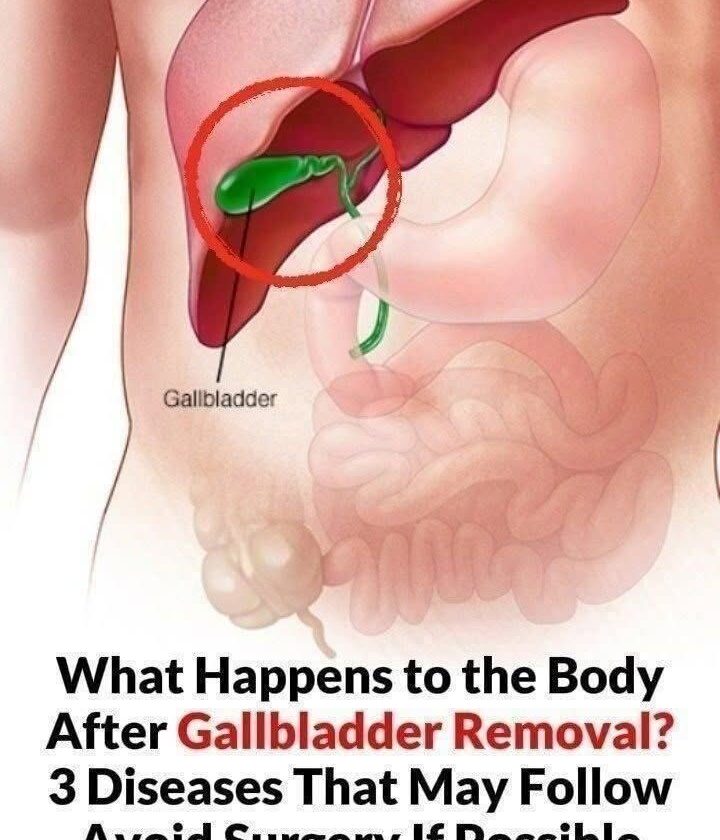
That headline is misleading and leans into fear more than medicine.
First, the important correction
Gallbladder removal (cholecystectomy) is one of the most common and well-studied surgeries in the world. It is usually done for gallstones causing pain, infection, or complications. For many people, it is not an optional procedure—it’s medically necessary.
Avoiding it “when possible” is already how doctors think: surgery is recommended only when benefits outweigh risks.
After gallbladder removal: what can actually happen?
The gallbladder stores bile. When it’s removed, bile flows continuously into the intestine instead of being stored. Most people adjust well, but a few may experience issues:
1. Digestive changes (post-cholecystectomy syndrome)
Some people get:
- Bloating
- Diarrhea
- Fatty food intolerance
This usually improves over time or with diet adjustments.
2. Bile acid diarrhea
Because bile flows continuously, it can sometimes irritate the bowel and cause:
- Frequent loose stools
- Urgency after meals
This is treatable with diet changes or medication if needed.
3. Rare bile duct issues or reflux symptoms
A small number of people may experience:
- Abdominal discomfort
- Acid-like symptoms
- Bile reflux gastritis
These are not common and can often be managed medically.
What the headline gets wrong
The idea that you should “avoid surgery when possible” ignores the main issue:
If you have symptomatic gallstones, avoiding surgery can lead to serious complications such as:
- Gallbladder infection (cholecystitis)
- Blocked bile ducts
- Pancreatitis
- Severe abdominal pain attacks
In these cases, delaying surgery can be more dangerous than having it.
Bottom line
Gallbladder removal (Cholelithiasis treatment via surgery, often called cholecystectomy) is generally:
- Safe
- Effective
- Life-improving for people with recurrent gallstone problems
Most patients live normally without a gallbladder after recovery.
If you want, I can explain who actually needs gallbladder surgery vs who can safely manage gallstones without it—that’s where the real decision-making matters.