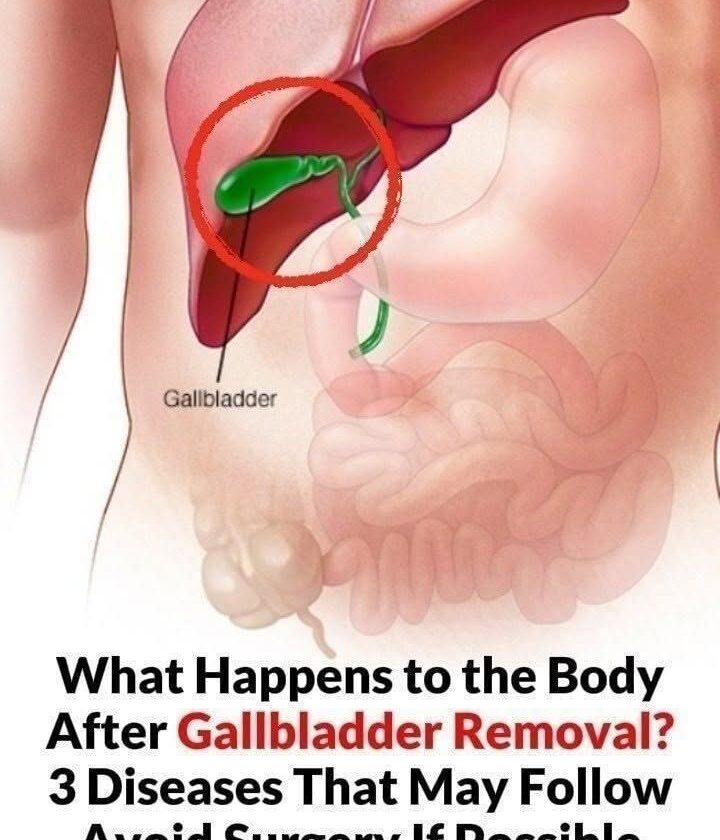
After Gallbladder Removal: 3 Conditions You Could Develop — What You Should Know Before Surgery
Gallbladder removal (cholecystectomy) is one of the most commonly performed abdominal surgeries. It is usually recommended when gallstones or gallbladder disease cause repeated pain, inflammation, infection, or serious complications.
The claim that gallbladder surgery should always be avoided is misleading. For many people, removal is the safest and most effective treatment. However, like any medical procedure, it can have possible side effects and long-term changes.
3 Possible Issues After Gallbladder Removal
1. Digestive Changes (Post-Cholecystectomy Symptoms)
After the gallbladder is removed, bile no longer collects and releases in response to meals. Instead, bile flows continuously from the liver into the intestine.
Some people may experience:
- Bloating
- Gas
- Indigestion
- Abdominal discomfort
- Nausea
These symptoms are often temporary, but some people may have longer-lasting digestive changes.
2. Diarrhea Related to Bile Acids
A small percentage of people develop ongoing diarrhea after gallbladder removal. This can happen when extra bile reaches the colon and stimulates bowel movements.
Possible approaches that may help include:
- Eating smaller meals
- Reducing very fatty meals
- Increasing fiber gradually
- Discussing bile acid–binding medications with a healthcare professional if needed
3. Bile Duct Problems (Uncommon but Important)
Possible complications include:
- Stones remaining in or forming in the bile ducts
- Bile leaks
- Injury to the bile ducts
- Inflammation of the pancreas caused by bile duct blockage
These problems are relatively uncommon but require medical