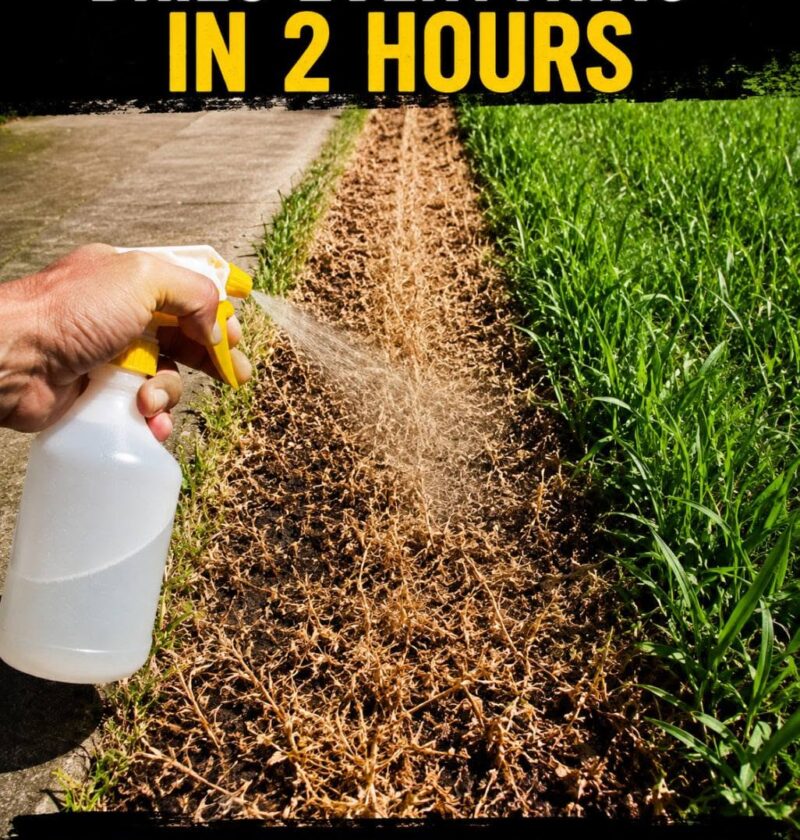
If you want a non-synthetic homemade weed killer, it’s worth knowing that many viral recipes claiming to “dry everything in 2 hours” are exaggerated. Results depend on the weed type, weather, and plant size.
Here are the most effective options:
- Boiling water (best for cracks in sidewalks or driveways)
- Pour freshly boiled water directly onto the weeds.
- It destroys plant tissues immediately.
- Avoid desirable plants, as it kills any vegetation it contacts.
- Vinegar spray (works best on young weeds)
- Mix:
- 1 gallon (3.8 L) white vinegar (5% acetic acid)
- 1 tablespoon liquid dish soap (helps the vinegar stick)
- Spray on a hot, sunny, dry day.
- Leaves may wilt within a few hours, but the roots often survive, so repeat applications are common.
- Avoid spraying nearby plants, since it is non-selective.
- Mix:
- Hand removal plus mulch
- Pull weeds after rain when the soil is moist.
- Cover bare soil with 2–4 inches (5–10 cm) of mulch to prevent new weeds from germinating.
- This is often the most effective long-term approach for gardens.
A few notes:
- Salt is often included in homemade weed-killer recipes, but it’s generally not recommended for gardens because it can remain in the soil and make it difficult for other plants to grow.
- Homemade weed killers are non-selective, meaning they’ll damage or kill grass, flowers, and vegetables they touch.
If your goal is to kill weeds in a driveway, between patio pavers, or in a flower bed, the best method differs. Tell me where the weeds are, and I can suggest the most effective approach.