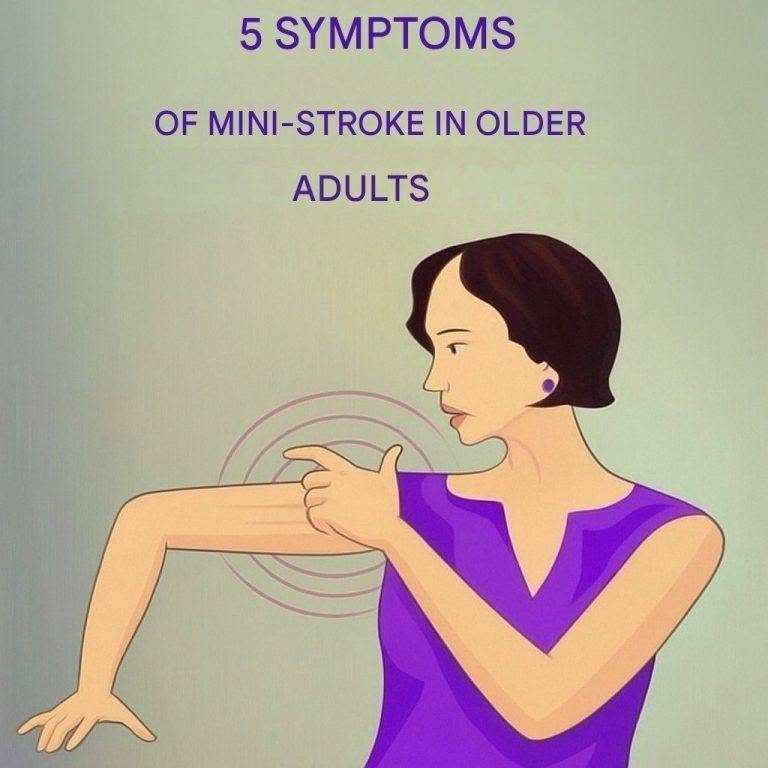
A mini stroke, also called a transient ischemic attack (TIA), is a temporary interruption of blood flow to part of the brain. Symptoms often resolve within minutes to an hour, but a TIA is a medical emergency because it can be a warning sign of a future stroke.
Five important symptoms in older adults that should never be ignored include:
- Sudden weakness or numbness on one side of the body
- This may affect the face, arm, or leg, typically on one side.
- Sudden difficulty speaking or understanding speech
- Speech may become slurred, or the person may have trouble finding words or understanding others.
- Sudden vision changes
- Blurred vision, double vision, or loss of vision in one or both eyes can occur.
- Sudden dizziness, loss of balance, or trouble walking
- A TIA can cause unsteadiness, poor coordination, or difficulty walking.
- Sudden severe confusion or trouble thinking clearly
- The person may appear confused or have difficulty following simple instructions.
A simple way to recognize possible stroke symptoms is the FAST acronym:
- Face: Does one side of the face droop?
- Arms: Is one arm weak or numb?
- Speech: Is speech slurred or difficult?
- Time: Call your local emergency services immediately.
Even if symptoms disappear completely, do not wait to see if they come back. A TIA can be a warning that a full stroke may occur soon, and prompt medical evaluation can help reduce that risk.
If someone develops sudden stroke-like symptoms—including facial drooping, arm weakness, speech difficulty, sudden vision loss, or severe dizziness—seek emergency medical care immediately. Time-sensitive treatment can significantly improve outcomes.