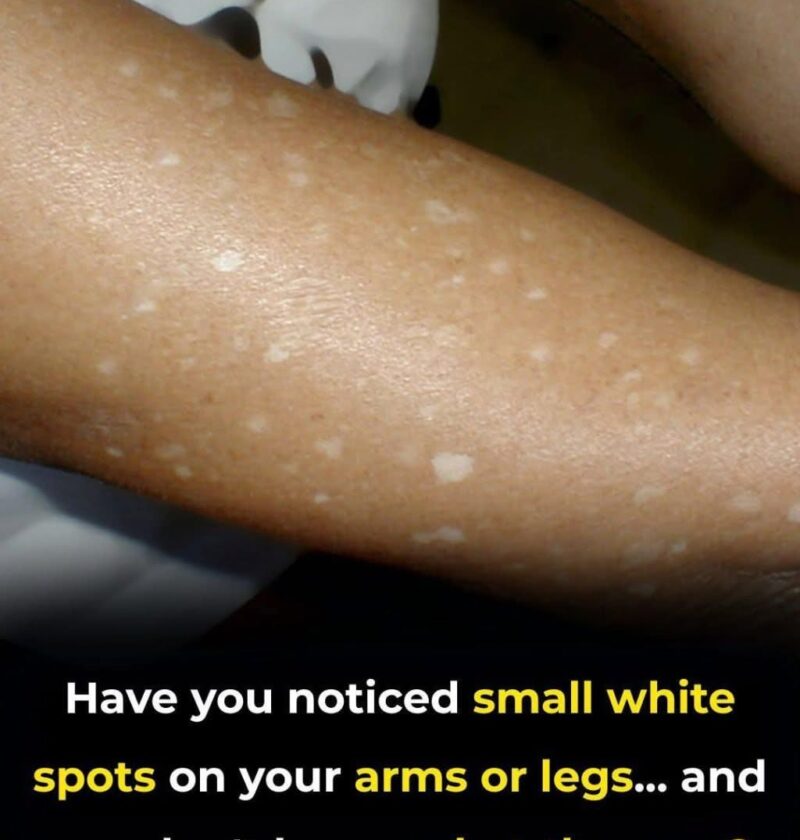
Small white spots on the arms or legs are fairly common, and there are several possible explanations. A specialist would usually look at the size, shape, texture, timing, and whether they are changing before deciding what they are.
Common causes of small white spots
1. Sun-related white spots (idiopathic guttate hypomelanosis)
- Small, flat, white spots often appear on sun-exposed areas such as forearms and lower legs.
- They are more common with increasing age and long-term sun exposure.
- They are usually harmless.
2. Dry skin or eczema-related changes
- Dryness or inflammation can temporarily reduce skin pigment and leave lighter patches.
- These areas may feel rough or itchy.
3. Fungal skin infections (such as tinea versicolor)
- Can cause lighter or darker patches, sometimes with fine scaling.
- Often affects the chest, back, shoulders, or upper arms but can appear elsewhere.
4. Vitiligo
- An autoimmune condition where pigment-producing cells are affected.
- Spots are often more sharply white and may gradually expand.
- A healthcare professional can help confirm the diagnosis.
5. Small scars or past skin injuries
- Previous cuts, burns, acne, or inflammation can sometimes leave lighter marks.
When to get them checked
Consider seeing a dermatologist if the spots:
- Are spreading quickly
- Have sharply defined milky-white borders
- Are appearing in new areas
- Are associated with itching, scaling, pain, or hair turning white in the area
- Are causing concern or uncertainty
What you can do now
- Use moisturizer if your skin is dry.
- Protect your skin from excessive sun exposure.
- Avoid harsh scrubbing or unverified “spot removal” remedies.
A photo can sometimes help narrow down possibilities, but a dermatologist may need to examine the skin directly (sometimes with a special light) to diagnose the cause.