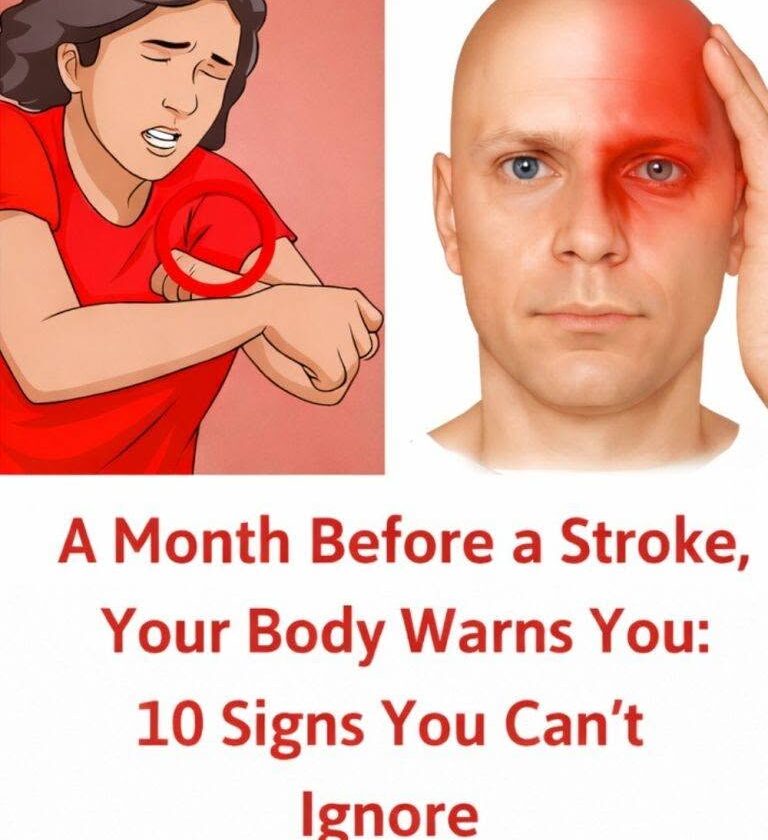
A stroke can sometimes be preceded by warning symptoms, but there is no reliable “one month before” checklist that predicts a stroke. Some people have warning episodes called transient ischemic attacks (TIAs)—often called “mini-strokes”—which can happen hours, days, or sometimes longer before a major stroke. A TIA is a medical emergency because it can be a warning sign of a future stroke.
10 warning signs that should not be ignored
- Sudden weakness or numbness
- Especially on one side of the face, arm, or leg.
- Face drooping
- One side of the face may appear uneven when smiling.
- Speech problems
- Slurred speech, difficulty speaking, or trouble understanding words.
- Sudden vision changes
- Blurred vision, double vision, or loss of vision in one or both eyes.
- Sudden severe headache
- A sudden, intense headache that is unusual for you, especially with other symptoms.
- Dizziness or loss of balance
- Trouble walking, coordination problems, or feeling unusually unsteady.
- Confusion
- Sudden difficulty understanding surroundings or following conversations.
- Trouble swallowing
- New difficulty controlling swallowing.
- Temporary stroke-like symptoms that go away
- Even if weakness, speech trouble, or vision changes disappear after minutes, it may still be a TIA.
- Unexplained changes in movement
- Sudden clumsiness, difficulty using an arm or hand, or loss of coordination.
Remember FAST:
- F — Face: Is one side drooping?
- A — Arms: Can both arms be raised evenly?
- S — Speech: Is speech strange or unclear?
- T — Time: Call emergency services immediately if these signs appear.
Seek urgent medical care if:
- Symptoms appear suddenly, even if they improve.
- There is chest pain, severe shortness of breath, fainting, or a sudden “worst headache.”
Reducing stroke risk also involves managing factors such as high blood pressure, diabetes, high cholesterol, smoking, physical inactivity, and irregular heart rhythms with guidance from a healthcare professional.