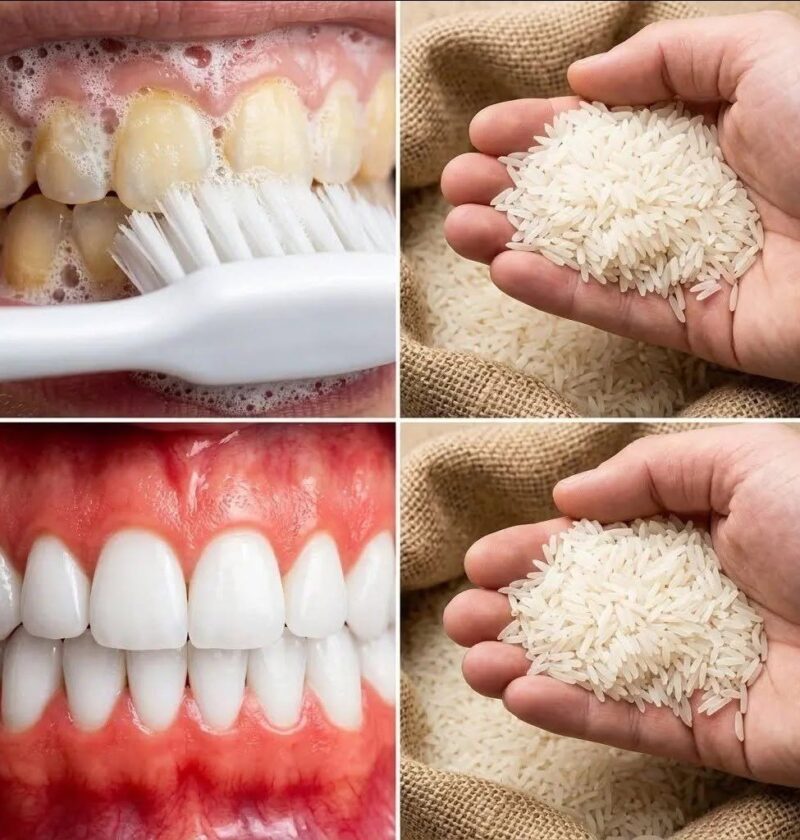
😁 “A Radiant Smile in 60 Seconds”: Does the Rice Method Really Work?
You may have seen a viral trick recommending rice water, cooked rice, or rice powder as a natural teeth-whitening treatment. There is no good clinical evidence that rice can whiten teeth dramatically in 60 seconds. The American Dental Association notes that evidence for DIY “natural” whitening methods is limited, while established whitening products use specific peroxide-based ingredients or controlled abrasives. (Ada Association)
🍚 What about rubbing rice on your teeth?
I wouldn’t recommend it. Rice isn’t a proven whitening agent, and vigorously rubbing any gritty substance against your teeth can contribute to surface abrasion, particularly if repeated.
If you want a quick improvement before going out:
- Brush gently for 2 minutes with a fluoride toothpaste.
- Floss to remove food between the teeth.
- Rinse with water.
- Use a clean, soft toothbrush rather than an abrasive homemade scrub.
Whitening toothpastes can help remove surface stains, although they generally produce more modest results than peroxide-based whitening treatments. (Ada Association)
⚠️ Avoid the “lemon + rice” version
Some online recipes combine rice with lemon or other acidic ingredients. Don’t use acidic mixtures on your teeth—acid can erode enamel, and combining an acid with an abrasive isn’t a good DIY whitening strategy.
🦷 If you want genuinely whiter teeth
For noticeable whitening, look for a reputable peroxide-based whitening product and follow its instructions, or ask a dentist about professional whitening. Temporary sensitivity and gum irritation are among the most common side effects of legitimate whitening treatments. (Ada Association)
Bottom line: Rice may make a catchy social-media recipe, but “one minute to a radiant smile” isn’t supported by dental evidence. For a quick clean appearance, ordinary fluoride toothpaste, flossing and gentle brushing are much safer choices.