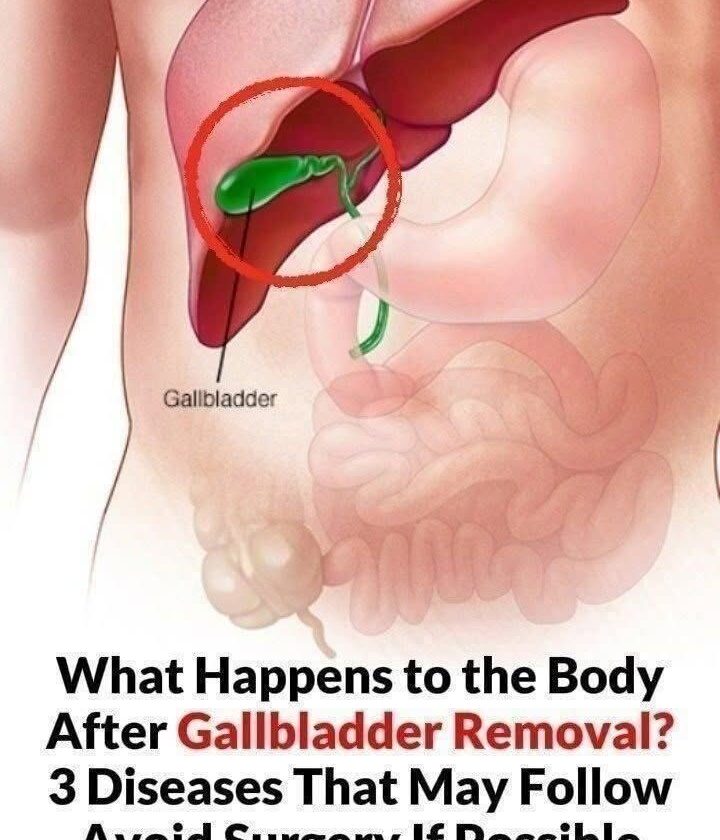
After Gallbladder Removal: What You Should Know About Possible Changes After Surgery
Claims that people should “avoid gallbladder removal whenever possible” can be misleading. Gallbladder removal (cholecystectomy) is a common and generally safe surgery that can be very helpful for people with painful gallstones, repeated gallbladder inflammation, or certain complications. However, like any surgery, it can have possible side effects.
Possible Conditions or Changes After Gallbladder Removal
1. Postcholecystectomy Syndrome
Some people continue to have digestive symptoms after surgery, such as:
- Abdominal discomfort
- Bloating
- Indigestion
- Nausea
- Diarrhea
These symptoms may have different causes, including bile flow changes or another digestive condition that was present before surgery.
2. Bile Acid Diarrhea
The gallbladder normally stores and releases bile when needed. After removal, bile flows continuously into the intestine. In some people, excess bile reaching the colon can cause:
- Frequent loose stools
- Urgency after eating
This condition can often be managed with dietary changes or medications prescribed by a healthcare professional.
3. Digestive Changes With Fatty Foods
Some people notice they have more difficulty tolerating:
- Fried foods
- Very fatty meals
- Large portions
Eating smaller meals and gradually adjusting the diet may help.
Why Gallbladder Removal Is Sometimes Recommended
Doctors may recommend surgery when gallstones or gallbladder disease cause:
- Recurrent attacks of severe upper abdominal pain
- Gallbladder infection (cholecystitis)
- Blocked bile ducts
- Pancreatitis related to gallstones
In these situations, delaying surgery can sometimes lead to more serious complications.
Life Without a Gallbladder
Most people live normally without a gallbladder. The liver still produces bile; the main change is that bile is no longer stored and released in the same way