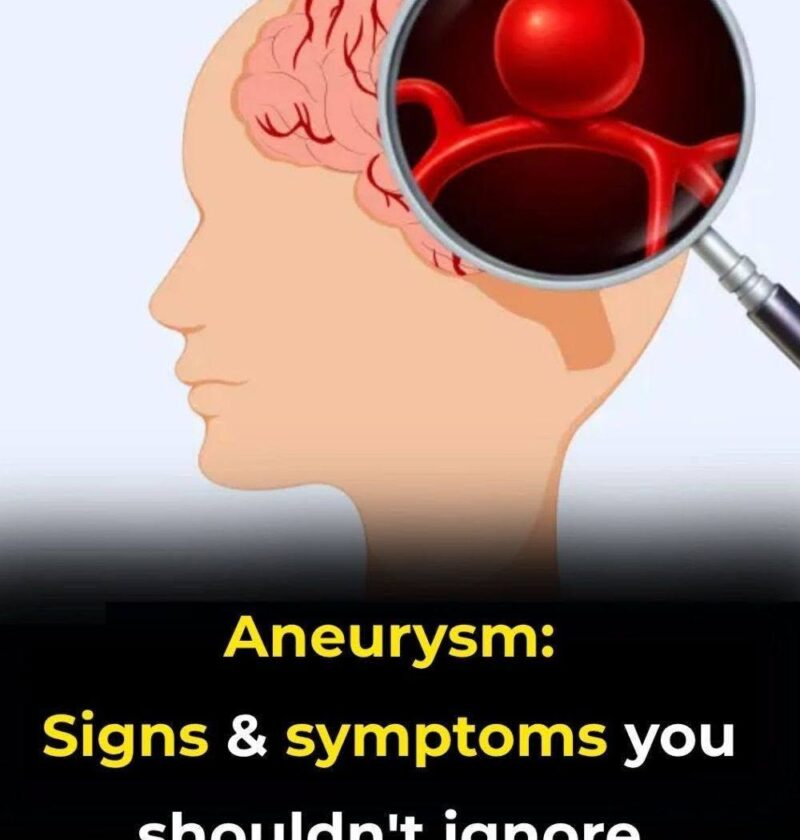
An aneurysm is a bulge or weakening in a blood vessel wall. Many aneurysms cause no symptoms until they become large or rupture, which is why warning signs matter.
Here are key symptoms you should not ignore, depending on the location:
Brain aneurysm (cerebral aneurysm)
Related to Brain aneurysm
Warning signs before rupture:
- Sudden, severe headache (“worst headache of your life”)
- Pain above or behind one eye
- Blurred or double vision
- Drooping eyelid
- Numbness or weakness in the face
- Difficulty speaking
If it ruptures (emergency):
- Sudden explosive headache
- Loss of consciousness
- Vomiting
- Seizure
- Neck stiffness
A rupture can lead to a life-threatening bleed called subarachnoid hemorrhage.
Aortic aneurysm (chest or abdomen)
Related to Aortic aneurysm
Possible warning signs:
- Deep, constant pain in chest, back, or abdomen
- Pulsating feeling in the abdomen
- Shortness of breath (in chest aneurysm)
- Sudden severe tearing pain (may signal rupture or dissection)
When to seek emergency help
Call emergency services immediately if you experience:
- Sudden, severe headache
- Sudden chest, back, or abdominal pain
- Fainting or collapse
- Sudden neurological symptoms (weakness, vision loss, speech trouble)
Risk factors
- High blood pressure (High blood pressure)
- Smoking
- Family history of aneurysms
- Age over 50
- Certain genetic conditions
Important reality check
Most aneurysms are silent until detected by imaging. Symptoms usually appear only when they are large, leaking, or rupturing—so any sudden severe symptoms should be treated as an emergency.
If you want, I can explain how aneurysms are detected early and what tests doctors use to prevent rupture.