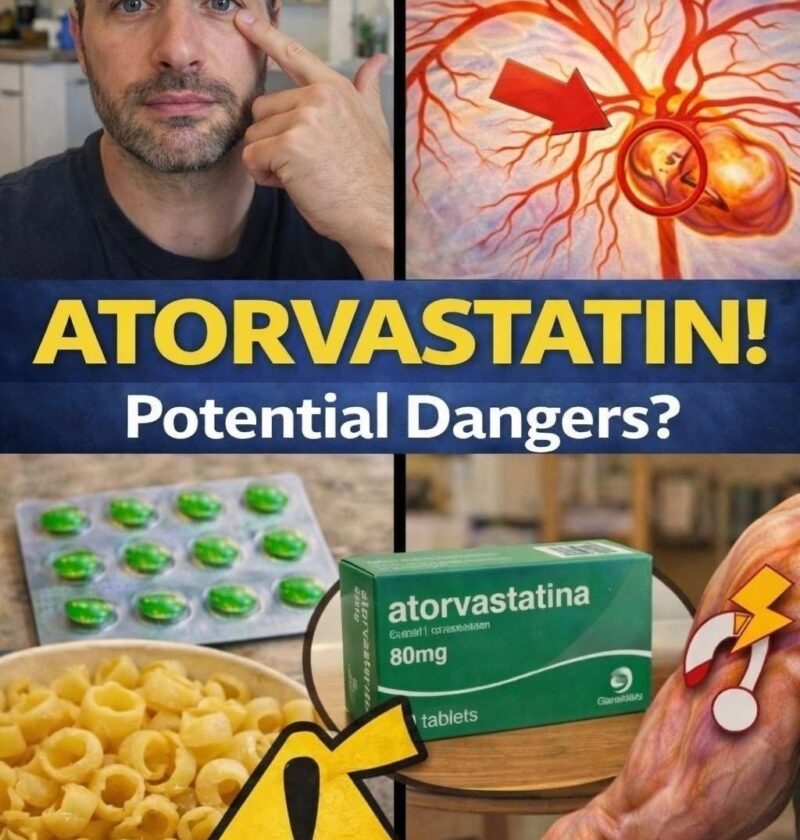
Here’s a clear, grounded breakdown of what actually matters with Atorvastatin.
Common, usually mild side effects
These are the ones doctors do routinely mention:
- Muscle aches or mild muscle soreness
- Mild digestive issues (nausea, gas, diarrhea, constipation)
- Headache
- Mild fatigue
Most people either don’t get these or find they improve over time.
Less common but important side effects
1. Muscle injury (myopathy)
Statins can sometimes affect muscle tissue.
- Mild form: aches or weakness
- Rare severe form: rhabdomyolysis (muscle breakdown)
This is very rare, but important because it can affect the kidneys.
Warning signs: severe muscle pain, dark urine, extreme weakness.
2. Liver enzyme changes
Atorvastatin can slightly raise liver enzymes.
- Usually mild and temporary
- Serious liver damage is extremely rare
Doctors sometimes check liver function early in treatment.
3. Blood sugar increase
Statins can slightly raise blood sugar levels.
- May unmask or slightly increase risk of type 2 diabetes in people already at risk
- Benefit (heart protection) usually far outweighs this risk
4. Cognitive symptoms (controversial)
Some people report:
- Forgetfulness
- “Brain fog”
Research has not confirmed a strong causal link. In most cases, symptoms are reversible if the medication is adjusted.
Rare effects often called “hidden dangers” online (but actually known medically)
5. Severe muscle breakdown (rhabdomyolysis)
Extremely rare, usually linked to:
- High doses
- Drug interactions
- Kidney disease
6. Allergic reactions
Very uncommon, but possible:
- Rash
- Swelling
- Breathing difficulty
7. Drug interactions
This is one of the most important real risks, often overlooked in viral posts.
Interactions can increase side effect risk with:
- Certain antibiotics
- Some antifungal medicines
- Grapefruit juice (in large amounts)
8. Sleep disturbance or vivid dreams
Reported occasionally, but not consistent across studies.
9. Mild memory or mood changes
Rare and inconsistent evidence; usually reversible.
10. Digestive enzyme changes
Usually mild and not clinically significant.
11. Joint pain
Can occur but is uncommon and often confused with normal aging or other conditions.
12. Fatigue or low energy
Sometimes reported early in treatment.
13. Hormone-related concerns
Some concerns exist about testosterone or steroid hormone effects, but strong clinical evidence is lacking.
14. Nerve symptoms (very rare)
Tingling or neuropathy has been reported but is not clearly proven as a direct cause.
15. “Long-term organ damage” claims
This is a common internet fear, but in real-world medical evidence:
- Long-term statin use is considered safe for most patients
- It reduces heart attack and stroke risk significantly
The big picture (important)
Atorvastatin is prescribed because it prevents heart attacks and strokes, which are far more common and dangerous than its serious side effects.
Most “hidden danger” claims online come from:
- Misinterpreting rare