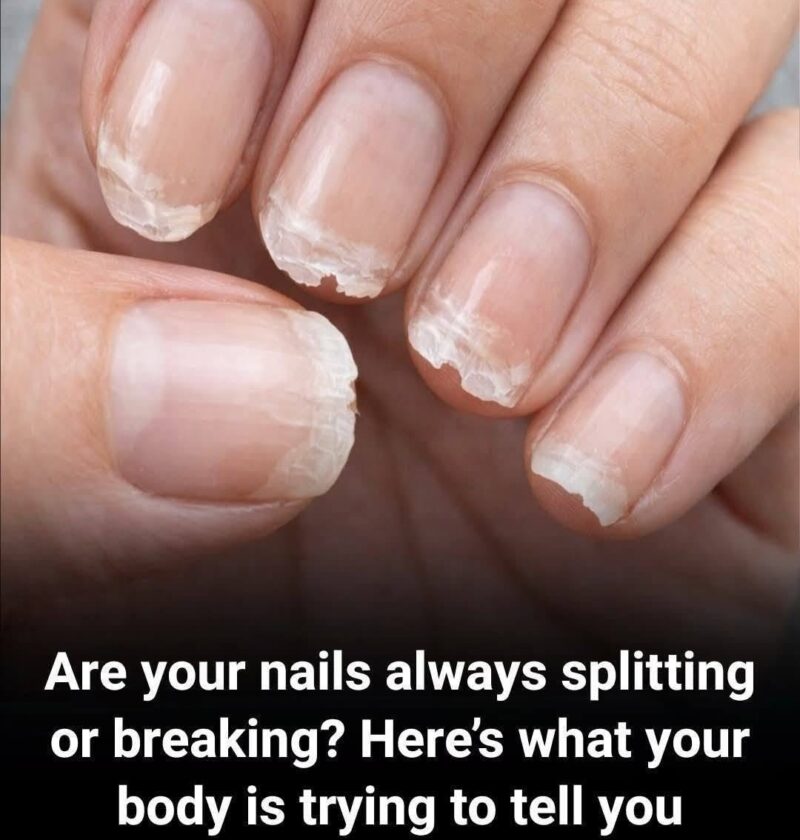
Common reasons your nails may become brittle
1. Too much water exposure
Frequent soaking and drying (washing dishes, frequent handwashing, swimming) can make nails swell and shrink repeatedly, weakening their structure and causing splitting or peeling.
2. Dryness and aging
As nails lose moisture, they can become thinner and more fragile. This is especially common with age, cold weather, or low humidity.
3. Nutritional factors
Nails are made largely of keratin, a protein. Poor nutrition or certain deficiencies may affect nail strength, including:
- Iron deficiency (sometimes associated with spoon-shaped nails or increased brittleness)
- Low protein intake
- Zinc deficiency (can affect nail growth and appearance)
- Other vitamin or mineral deficiencies in some cases
However, taking supplements without a confirmed deficiency does not always improve nail strength.
4. Nail products and chemicals
Frequent use of:
- Acetone-based nail polish removers
- Harsh cleaning chemicals
- Acrylic or gel nails with repeated removal
- Excessive buffing
can weaken the nail plate.
5. Thyroid or other health conditions
Changes in nails can sometimes occur with medical conditions, including:
- Underactive thyroid (hypothyroidism)
- Certain skin conditions such as eczema or psoriasis affecting the nails
- Some systemic illnesses
Signs worth paying attention to
Consider getting medical advice if brittle nails appear with:
- Sudden major changes in nail texture
- Nails that become very thin or spoon-shaped
- Significant ridges, discoloration, or separation from the nail bed
- Hair loss, unusual fatigue, weight changes, or other new symptoms
Ways to make nails stronger
- Moisturize hands and nails regularly (especially after washing)
- Wear gloves when using water or cleaning products
- Keep nails trimmed and avoid aggressive filing
- Limit harsh nail treatments and acetone exposure
- Eat a balanced diet with enough protein, iron-rich foods, and a variety of nutrients
Brittle nails are often your body’s way of showing stress on the nail structure rather than a clear warning sign of illness. The pattern of changes—how they look, how quickly they appeared, and whether other symptoms are present—matters most.