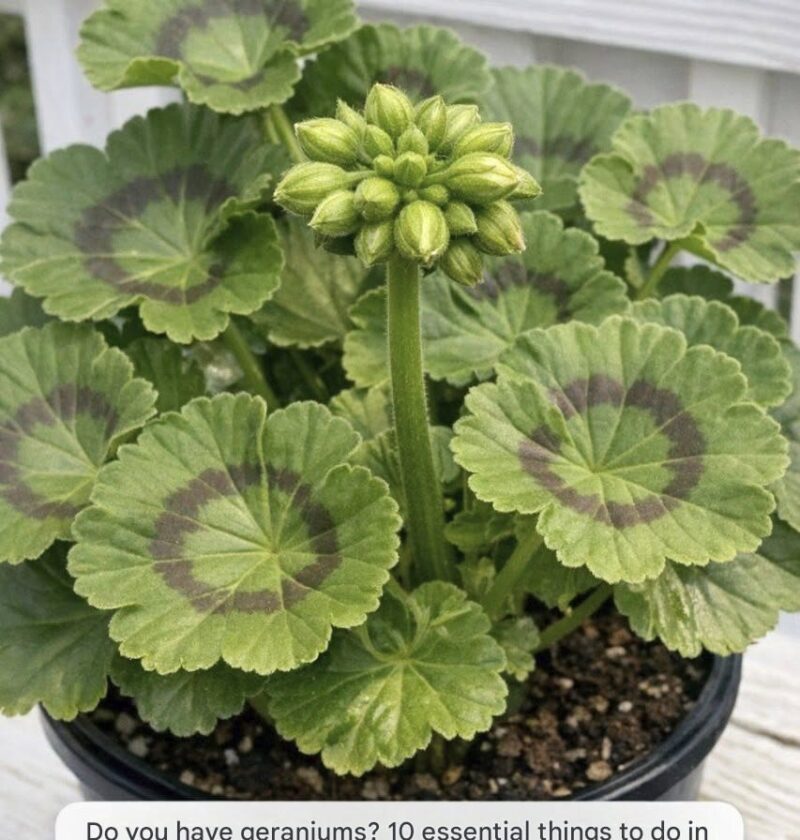
🌺 Do You Have Geraniums? 10 Essential Things to Do in May for Flowers Until Frost
If you’re growing the common garden geraniums (Pelargonium), May is an important month to prepare them for a long, colorful flowering season. There isn’t one secret trick that guarantees blooms until frost, but these 10 practices can make a big difference.
1. ☀️ Give them plenty of sunlight
Aim for at least 6 hours of direct sun a day. Too much shade can produce leafy plants with fewer flowers.
2. 🌡️ Wait until frost danger has passed
Pelargoniums are frost-sensitive. Plant them outdoors only after the danger of frost has passed and the soil has warmed.
3. 🌱 Use well-draining soil
Geraniums dislike constantly wet roots. Use fertile but well-drained soil, particularly in containers.
4. 💧 Water thoroughly—but don’t overwater
Water when the soil has begun to dry rather than keeping it permanently wet. Container plants may need more frequent watering during hot, dry weather.
5. 🌸 Deadhead regularly
Remove faded flower clusters before they develop seeds. Regular deadheading encourages additional blooms and keeps plants looking tidy.
6. ✂️ Pinch leggy plants
If your geranium has long, bare stems, pinch back growing tips to encourage branching. A fuller plant has more places to produce flower clusters.
7. 🌿 Feed appropriately
Geraniums benefit from regular feeding during active growth, particularly in containers. Depending on the fertilizer, feeding every 2–4 weeks or according to the product label is commonly recommended. Avoid excessive fertilizer, which can encourage foliage at the expense of flowers.
8. 🪴 Check the container
Make sure the pot has adequate drainage holes and isn’t severely root-bound. Containers that are too small can dry out quickly during warm weather.
9. 🌬️ Keep leaves relatively dry
Water the soil rather than repeatedly wetting the foliage. Good airflow and dry leaves help reduce disease problems.
10. 🔍 Inspect plants regularly
Once a week, check leaves, stems, and flowers for pests, discoloration, damaged growth, or disease. Removing affected material early is much easier than dealing with a serious problem later