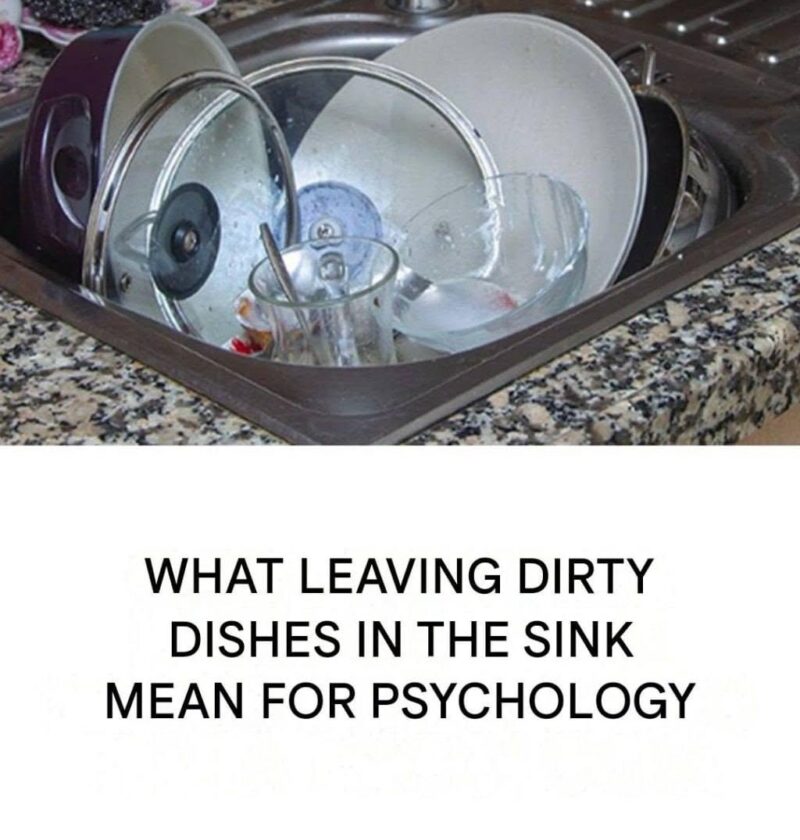
If you’re asking what psychology says about leaving dishes in the sink, it usually isn’t a sign of one specific personality trait.
Common explanations include:
- Decision fatigue: After a long day, a small chore can feel disproportionately effortful.
- Task avoidance: An unpleasant or boring task gets postponed because the immediate reward of resting feels better.
- Low urgency: If dirty dishes don’t bother you much, your brain may simply rank them below other priorities.
- Executive-function differences: Difficulty initiating, sequencing, or completing mundane tasks can make chores harder—even when you intend to do them.
- Stress or low mood: When you’re overwhelmed, ordinary household maintenance can become difficult.
- Different standards of cleanliness: Some people genuinely don’t experience an unwashed sink as a problem until later.
So, a sink full of dishes doesn’t automatically reveal that someone is lazy, disorganized, or psychologically unhealthy. Context matters—especially whether the behavior is occasional, habitual, distressing, or interfering with daily life.