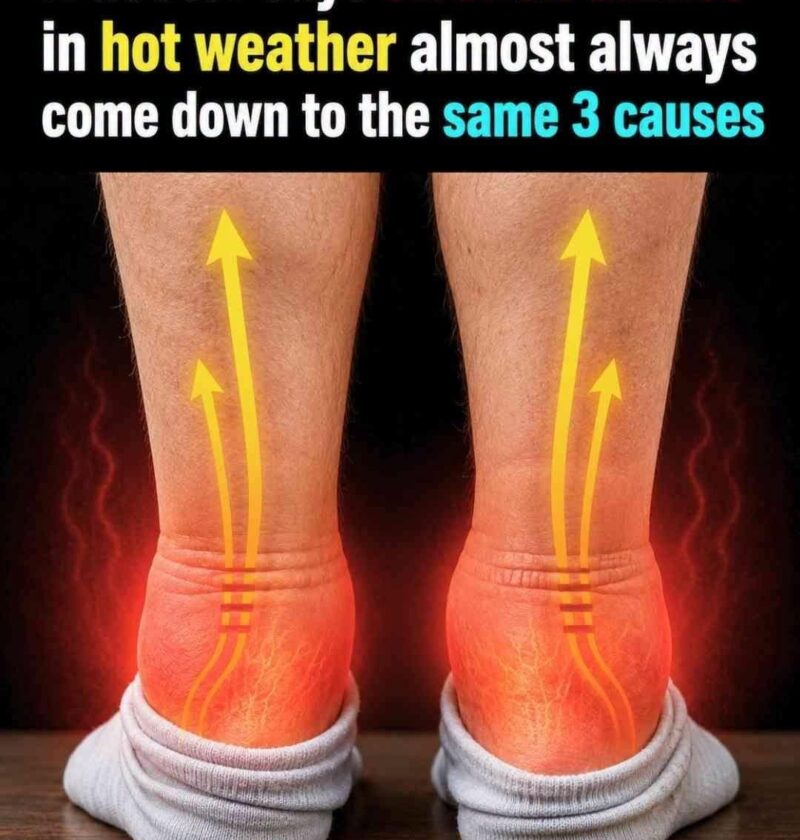
The statement “Doctors say most swollen ankles in summer aren’t a heart or kidney problem” is generally true, but it needs context.
Swollen ankles in hot weather are often caused by temporary fluid retention rather than a serious heart or kidney condition. Heat causes blood vessels to expand, and gravity can allow more fluid to collect in the lower legs and feet, especially after standing or sitting for long periods.
Common summer-related causes include:
- Heat-related swelling (dependent edema): Fluid collects around the ankles due to gravity and blood vessel changes.
- Long periods of standing or sitting
- High salt intake
- Travel or reduced movement
- Certain medications (such as some blood pressure medicines)
However, ankle swelling can sometimes be linked to medical conditions, including:
- Heart failure
- Kidney disease
- Liver disease
- Vein problems (such as chronic venous insufficiency)
- Blood clots (especially if swelling is sudden and affects one leg)
Seek medical advice if swelling:
- Appears suddenly or is severe
- Affects only one leg
- Comes with chest pain, shortness of breath, or fainting
- Is associated with redness, warmth, or significant pain
- Persists or worsens despite simple measures
For mild heat-related swelling, helpful steps may include elevating your legs, moving regularly, staying hydrated, and reducing excess salt.
So, visible ankle swelling in summer is often harmless and heat-related, but persistent or unusual swelling should be evaluated rather than assumed to be normal.