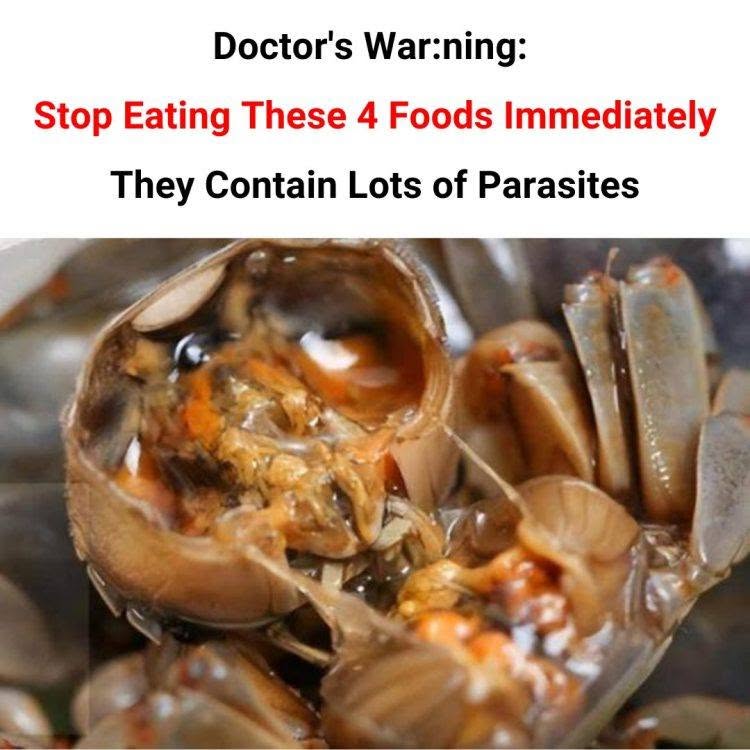
“Doctors Warn: Limit Eating These 4 Foods Immediately — They Contain a Lot of Parasites” — Is This True?
Posts with headlines like this are spreading online, but the claim is usually misleading. Many foods can potentially carry parasites if they are contaminated or improperly handled, but it does not mean that these foods are normally “full of parasites” or unsafe to eat.
The real issue is food safety practices.
1. Raw or undercooked fish
Examples:
- Raw seafood (such as some sushi or ceviche)
- Undercooked freshwater fish
Possible risk:
- Certain parasites, such as tapeworms or roundworms, can be present in some fish.
Reduce the risk:
- Eat fish that has been properly frozen or cooked according to food safety guidelines.
- Buy seafood from reputable sources.
2. Undercooked meat
Examples:
- Pork
- Wild game
- Meat that is rare or improperly prepared
Possible risk:
- Some parasites can be transmitted through undercooked meat.
Reduce the risk:
- Cook meat thoroughly.
- Use safe food-handling practices.
3. Raw or poorly washed vegetables and fruits
Examples:
- Leafy greens
- Herbs
- Produce grown in contaminated soil or water
Possible risk:
- Parasite eggs or other microorganisms may contaminate produce.
Reduce the risk:
- Wash produce under running water.
- Avoid cross-contamination during food preparation.
4. Unpasteurized foods
Examples:
- Raw milk
- Some unpasteurized dairy products
Possible risk:
- They can contain harmful bacteria and, in some cases, parasites depending on contamination.
Reduce the risk:
- Choose pasteurized products, especially for children, pregnant people, older adults, and those with weakened immune systems.