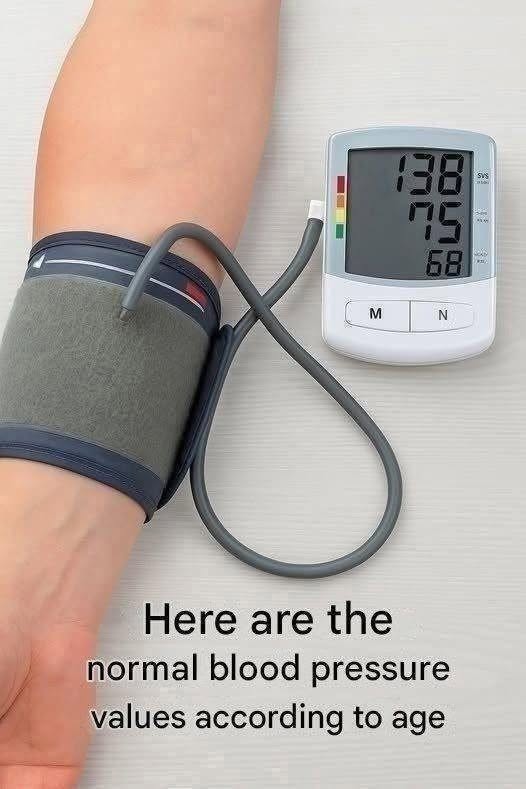
The headline “Here are the normal blood pressure values according to age” is a common health post, but it is important to know that there is not a separate “normal” blood pressure number for every age group. Blood pressure targets depend on overall health, medical conditions, and individual risk factors.
A general guide for adults:
| Category | Blood pressure reading |
|---|---|
| Normal | Less than 120/80 mmHg |
| Elevated | 120–129 systolic and less than 80 diastolic |
| High blood pressure (Stage 1) | 130–139 systolic or 80–89 diastolic |
| High blood pressure (Stage 2) | 140+ systolic or 90+ diastolic |
Older adults
Blood pressure often rises with age because arteries become less flexible, but this does not mean higher readings are automatically healthy. Many adults over 65 are still advised to aim for blood pressure around the same general range, with adjustments made by their healthcare professional based on:
- Overall health
- Risk of falls or dizziness
- Heart disease history
- Kidney function
- Medications
Tips for accurate home readings
- Rest quietly for about 5 minutes before measuring.
- Sit with your back supported and feet flat on the floor.
- Keep your arm supported at heart level.
- Avoid caffeine, exercise, or smoking shortly before checking.
A single high reading does not always mean you have hypertension—repeated measurements over time are usually needed for diagnosis.
If you tell me the person’s age and blood pressure reading (for example, 150/90), I can help interpret whether it is generally considered high or within a typical range.