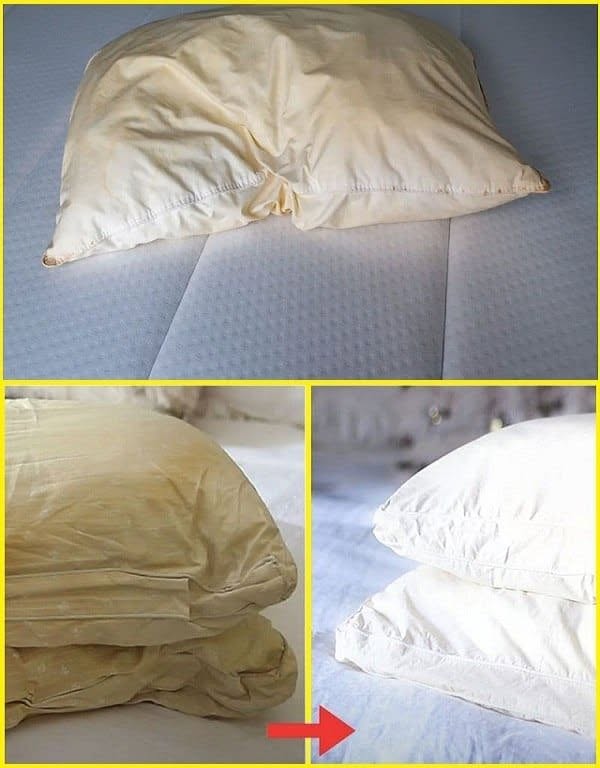
If your bed pillows have become yellowed, stained, or have an unpleasant odor, you can often freshen and whiten them with proper washing. The best method depends on the pillow’s filling, so check the care label first.
For machine-washable pillows (down, feather, or polyester)
- Remove the pillowcase and any pillow protector.
- Wash two pillows at a time (if possible) to help balance the washing machine.
- Use warm water and a small amount of liquid laundry detergent.
- For extra whitening, you can add an oxygen-based bleach (follow the product’s directions). This is generally safer for fabrics than chlorine bleach.
- Run an extra rinse cycle to remove any detergent residue.
Drying
- Tumble dry on low heat.
- Add a couple of clean tennis balls (inside socks) or dryer balls to help keep the filling fluffy.
- Make sure the pillows are completely dry before using them to prevent mildew.
For memory foam or latex pillows
These usually should not be machine washed because it can damage the foam.
- Spot-clean stains with a mild detergent and a damp cloth.
- Let the pillow air-dry completely.
- Sprinkle baking soda over the pillow, leave it for a few hours, then vacuum it off to help remove odors.
Removing odors
If the pillow isn’t badly stained:
- Sprinkle baking soda over the surface.
- Let it sit for several hours.
- Vacuum it off.
- Air the pillow outside on a dry, sunny day if possible.
Prevent future stains
- Use a washable pillow protector under your pillowcase.
- Wash pillowcases weekly.
- Wash pillows every 3–6 months, if the care label allows.
When to replace a pillow
Even with cleaning, pillows should be replaced if they:
- Stay lumpy or flat.
- Have persistent odors.
- Show mold or heavy staining.
- Are several years old and no longer provide support.
With regular washing and proper drying, many pillows can become noticeably cleaner, fresher-smelling, and brighter, though very old yellow stains may not disappear completely.