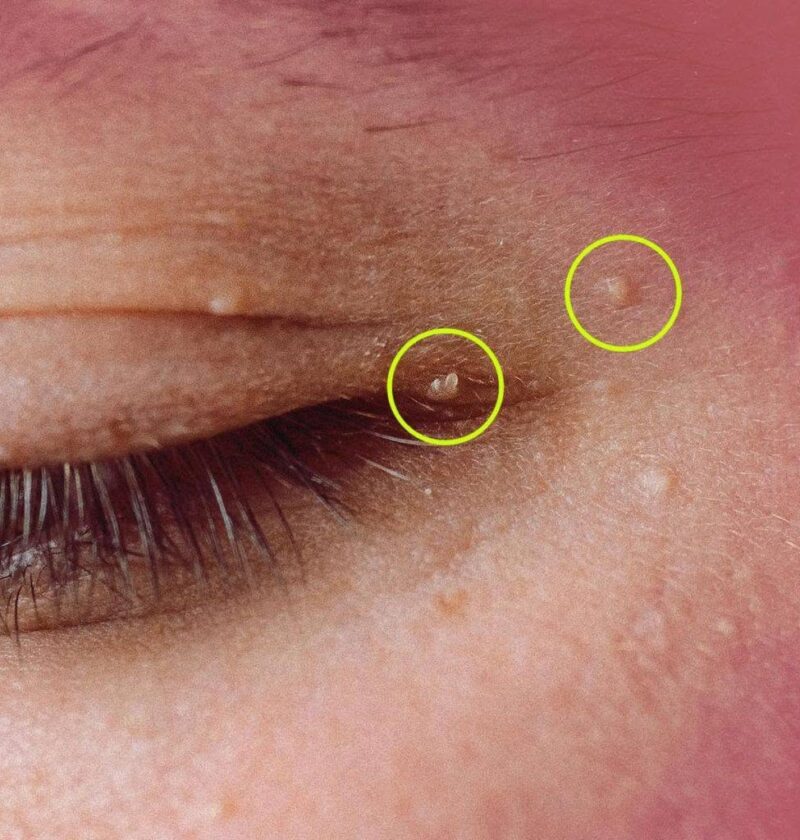
The headline “How to Get Rid of Milia: Those Annoying Fat Cysts” is partly accurate but uses an incorrect term. Milia are not fat cysts. They are tiny, harmless keratin-filled cysts that form when dead skin cells become trapped just under the surface of the skin.
Common facts about milia:
- They often appear as small white or yellowish bumps, especially around the eyes, cheeks, nose, or forehead.
- They are not acne, so squeezing them like pimples usually does not work and may cause irritation or scarring.
- They often disappear on their own over weeks or months.
Ways that may help:
- Use gentle cleansing and avoid harsh scrubbing.
- Use sunscreen daily to reduce skin damage that can contribute to milia.
- Some people benefit from skincare ingredients that encourage cell turnover, such as retinoids, but these should be used appropriately and may not be suitable for everyone.
- A dermatologist can remove persistent milia safely using sterile techniques.
Avoid:
- Poking or cutting them at home.
- Aggressive exfoliation around the eyes.
- “Miracle” remedies that claim to dissolve them instantly.
So the headline is partly misleading: milia can be treated, but they are not fat deposits, and there is no guaranteed overnight cure. Persistent or unusual bumps should be checked by a dermatologist to confirm the diagnosis.