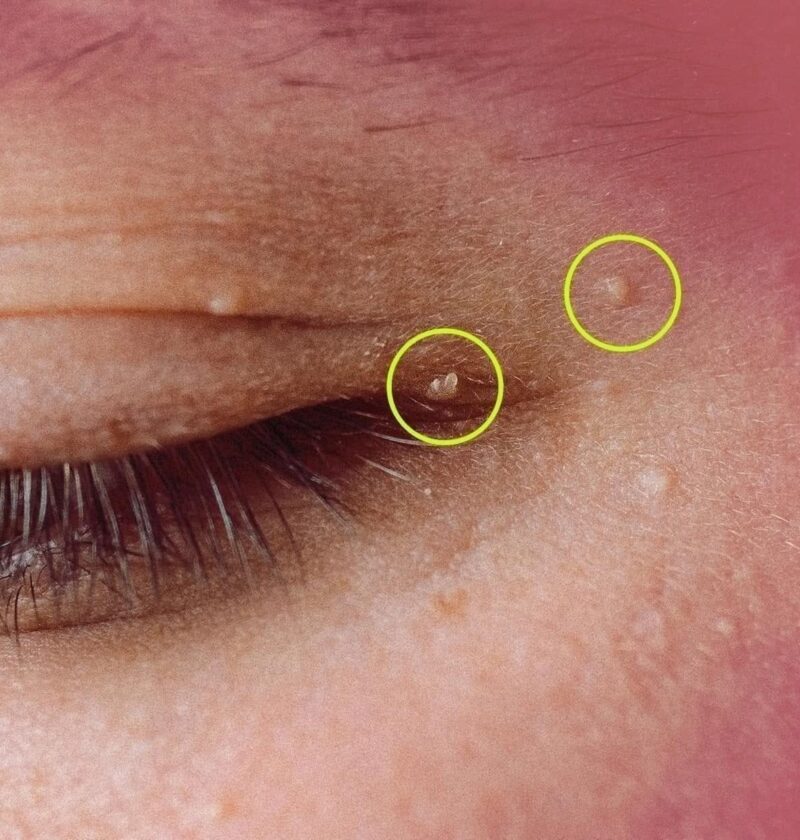
If by “fat cysts” you mean milia, they’re tiny, firm white or yellowish cysts caused by trapped dead skin cells—not actually fat and not a type of acne. They’re usually harmless. (Cleveland Clinic)
How to get rid of milia
- Don’t squeeze or pick them. Unlike a whitehead, milia usually won’t pop easily. Trying to dig them out can cause infection or permanent scarring. (Cleveland Clinic)
- Use gentle skincare. Wash with a mild cleanser and avoid very heavy creams or oily products if you notice they seem to trigger the bumps.
- Consider gentle exfoliation. An appropriate over-the-counter exfoliating product may help some adults, but avoid aggressive scrubbing, particularly around the eyes. (Cleveland Clinic)
- Retinoids may help. Products containing adapalene, or prescription tretinoin, can be used for some cases. Retinoids aren’t appropriate for everyone, so check with a clinician/pharmacist before using them—especially during pregnancy. (Cleveland Clinic)
- For fast removal, see a dermatologist. A professional can open and remove the cyst safely; other treatments such as cryotherapy may sometimes be used. (Cleveland Clinic)
- Protect your skin from the sun. Regular sunscreen can help protect against skin damage that can contribute to some forms of milia. (Cleveland Clinic)
Milia can disappear on their own over weeks to a few months, although persistent adult milia may need professional treatment. (Cleveland Clinic)
One important point: not every tiny white bump is milia. Syringomas, sebaceous hyperplasia, clogged pores and other skin conditions can look similar. If a bump is growing, bleeding, painful, inflamed, or doesn’t go away, have it examined rather than trying to remove it yourself. (Cleveland Clinic)
For reliable dermatology information, you can also consult the American Academy of Dermatology.