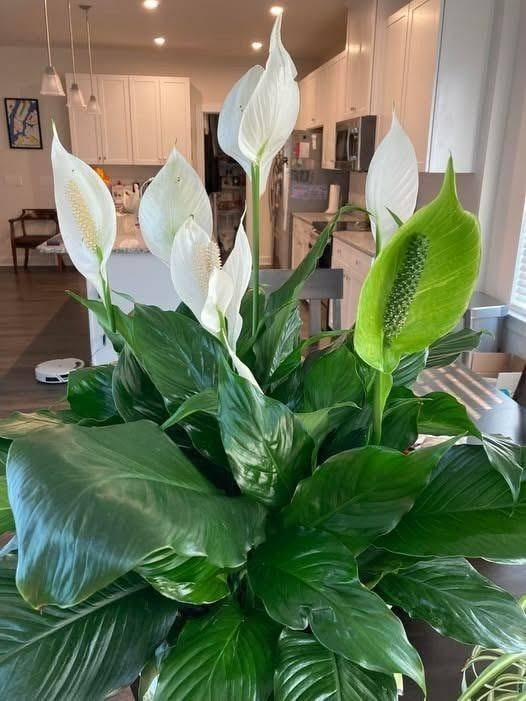
A peace lily can be a long-lived, beautiful houseplant, but if it isn’t flowering, it’s usually because one or more of its growing conditions aren’t ideal. Here are some practical tips to encourage more blooms.
1. Give it bright, indirect light
This is the most common reason peace lilies don’t flower.
- Place it near a bright window with filtered light.
- Avoid intense midday sun, which can scorch the leaves.
- Very low light allows the plant to survive but often reduces flowering.
2. Water consistently
- Water when the top 1–2 inches (2.5–5 cm) of soil feel dry.
- Water thoroughly until excess drains from the pot.
- Don’t let the plant sit in standing water, as this can lead to root rot.
3. Fertilize sparingly
- Feed with a balanced houseplant fertilizer at half strength every 6–8 weeks during spring and summer.
- Too much fertilizer can promote leafy growth at the expense of flowers.
4. Maintain warmth and humidity
Peace lilies prefer:
- Temperatures between 65–80°F (18–27°C)
- Moderate to high humidity
If your home is very dry, occasional misting or placing the pot on a pebble tray with water (without the pot sitting in the water) can help.
5. Repot only when needed
Peace lilies often bloom well when they’re slightly root-bound.
- Repot only when roots are crowded or growing out of the drainage holes.
- Choose a pot only one size larger than the current one.
6. Remove spent flowers
Trim faded flower stalks at the base so the plant can direct energy toward producing new blooms.
7. Be patient
Many peace lilies naturally flower more in spring and early summer, though healthy plants may bloom at other times of the year.
Why your peace lily may not be blooming
Common causes include:
- Too little light
- Overwatering or underwatering
- Excess fertilizer
- A very young plant
- Stress from recent repotting
- Temperatures that are too cold