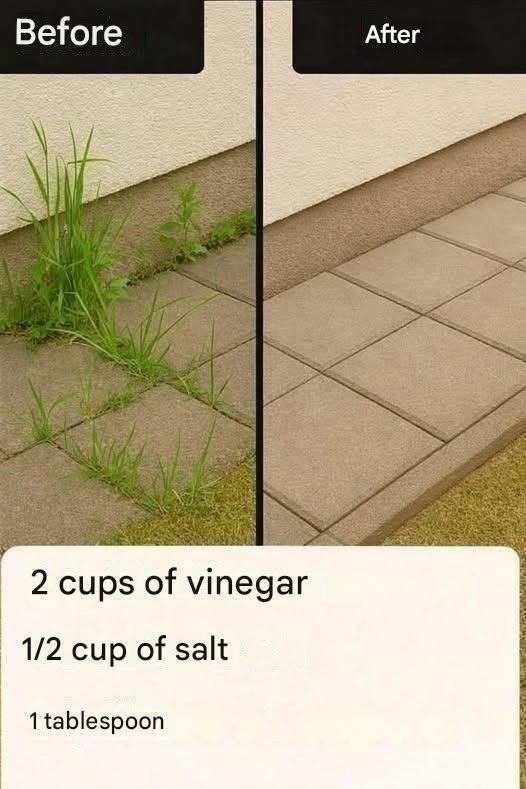
If you’re looking for a homemade herbicide, the most effective recipes are non-selective, meaning they’ll damage or kill many plants they contact—not just weeds. They’re best for weeds growing in cracks in pavement, driveways, or gravel, not in lawns or garden beds.
A common recipe is:
- 1 gallon (3.8 L) white vinegar (5% acetic acid)
- 1 tablespoon liquid dish soap
Mix gently and spray directly onto the leaves of weeds on a warm, dry, sunny day. The soap helps the solution stick to the leaves. Repeat applications are often needed, especially for perennial weeds.
Some recipes also add salt, but it’s generally best to avoid salt unless you’re treating an area where you never want plants to grow. Salt can persist in the soil, making it difficult for desirable plants to grow later, and it can spread beyond the target area.
Keep in mind:
- Vinegar-based sprays work best on young, actively growing weeds.
- They mainly burn the above-ground growth and may not kill deep roots, so perennial weeds often regrow.
- Avoid spraying on windy days to prevent damaging nearby plants.
- Wear gloves and eye protection, especially if using stronger horticultural vinegar (20% acetic acid), which can cause burns.
For long-term control of persistent weeds, combining physical removal (pulling or digging out roots) with mulching is often more effective than homemade sprays alone.