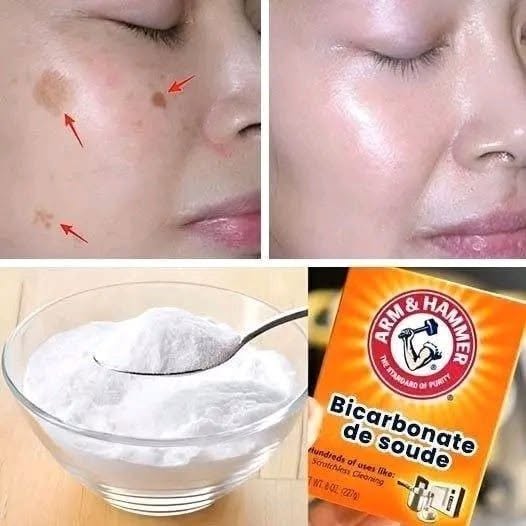
Why baking soda is a problem for skin
Baking soda (sodium bicarbonate) is highly alkaline, while healthy skin is slightly acidic. When you apply it to your face, it can:
- Disrupt the skin’s natural barrier
- Cause dryness and irritation
- Trigger redness, peeling, or burning
- Worsen pigmentation over time in some people
So instead of improving dark spots or wrinkles, it can actually make skin damage worse.
What it cannot do (despite claims)
- ❌ Remove dark spots permanently
- ❌ Erase wrinkles
- ❌ Cure dark circles
- ❌ “Bleach” skin safely
These conditions have deeper causes like sun damage, genetics, pigmentation changes, sleep issues, or aging—not something a baking soda paste can fix.
Safer and proven alternatives
For dark spots (hyperpigmentation)
Better options include:
- Sunscreen daily (most important)
- Vitamin C serums
- Retinoids (vitamin A derivatives)
- Niacinamide
For wrinkles
- Retinoids (best studied topical anti-aging ingredient)
- Moisturizers with hyaluronic acid
- Sun protection to prevent further damage
For dark circles
Depends on cause:
- Sleep improvement (fatigue-related)
- Caffeine eye creams (puffiness)
- Treat allergies if present
- Hydration and iron balance (in some cases)
If someone still insists on using baking soda
Dermatologists generally advise not to apply it to the face, but if someone experiments anyway, it should never be:
- Used daily
- Left on skin for long periods
- Combined with harsh scrubbing
Even then, risk is higher than benefit.
Bottom line
Baking soda is useful for cleaning, not skincare. For facial issues like dark spots, wrinkles, and dark circles, gentle, evidence-based skincare + sun protection works far better and is safer.
If you want, I can suggest a simple routine based on your skin type (oily, dry, or combination) that actually targets these concerns safely.