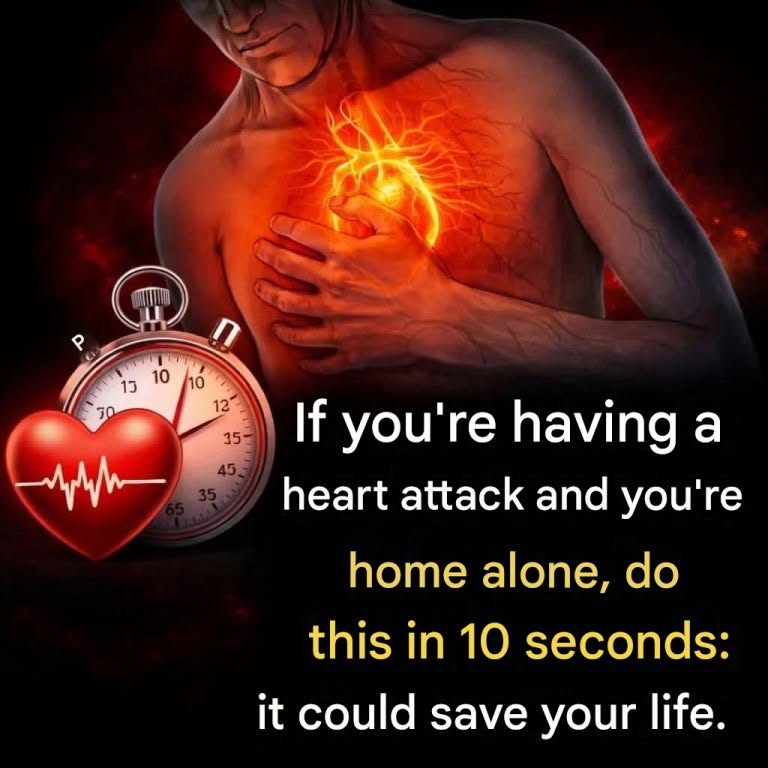
The claim “If you have a heart attack at home, do this in 10 seconds and you can save your life” is misleading. There is no 10-second technique that can reliably stop or reverse a heart attack.
If you think you are having a heart attack, the most important actions are:
- Call your local emergency medical services immediately. Don’t try to “wait it out.”
- Sit down and rest while waiting for help.
- Chew an aspirin (160–325 mg) only if:
- You are not allergic to aspirin,
- You have not been told by a doctor to avoid it because of bleeding or another medical reason, and
- An emergency dispatcher or healthcare professional advises it, if possible.
- Unlock your door if you can do so safely, so emergency responders can reach you quickly.
- Do not drive yourself to the hospital unless no other option is available.
Common heart attack symptoms
- Chest pain, pressure, squeezing, or heaviness
- Pain spreading to the arm, shoulder, neck, jaw, or back
- Shortness of breath
- Cold sweat
- Nausea or vomiting
- Lightheadedness or fainting
Symptoms can be different or less typical in women, older adults, and people with diabetes.
What about “cough CPR”?
You may have seen advice to cough repeatedly during a heart attack. This is not recommended for someone at home with a suspected heart attack. “Cough CPR” has a very limited role in rare, monitored hospital situations and should not be used instead of calling emergency services.
If the person collapses and becomes unresponsive, someone nearby should:
- Call emergency services.
- Begin CPR if trained or follow dispatcher instructions.
- Use an automated external defibrillator (AED) if one is available.
The fastest way to improve survival from a heart attack is rapid emergency medical treatment, not a home remedy or viral trick.