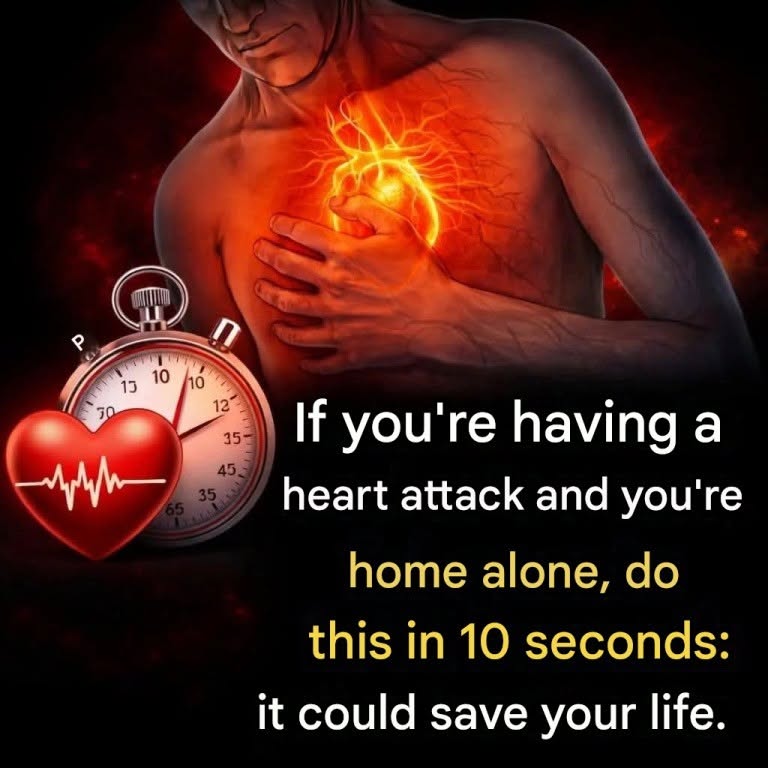
“If you have a heart attack at home, do this in 10 seconds and you can save your life.”
is a common viral emergency-health claim. It is misleading because there is no single 10-second trick that can stop a heart attack or guarantee survival. The most important actions are recognizing the warning signs and getting emergency help quickly.
If you think you are having a heart attack:
1. Call emergency services immediately
- Call 911 (or your local emergency number).
- Do not try to drive yourself to the hospital.
2. Stop activity and sit or lie down
- Rest in a comfortable position, preferably sitting upright if breathing is difficult.
- Try to stay as calm as possible while waiting for help.
3. Follow medical guidance about aspirin
- If emergency operators or a healthcare professional advise it, chewing an aspirin may help some people with suspected heart attacks because it can reduce clot formation.
- Do not take aspirin if you have been told to avoid it, have a serious allergy, or have certain bleeding risks.
4. If you are alone
- Unlock the door if you can.
- Keep your phone nearby.
- Sit near the entrance if it is safe to do so, so emergency responders can reach you.
Common heart attack warning signs
Symptoms can include:
- Pressure, squeezing, fullness, or pain in the chest
- Pain spreading to the arm, shoulder, back, neck, jaw, or stomach
- Shortness of breath
- Cold sweat
- Nausea or vomiting
- Sudden unusual fatigue or weakness
Women, older adults, and people with diabetes may sometimes have less typical symptoms.
What about “cough CPR” or similar viral tricks?
Claims that forceful coughing, drinking water, or performing a special movement can stop a heart attack are not reliable first-aid methods and can delay emergency care.
The most effective “life-saving move” is simple: recognize the signs and get emergency help as fast as possible. If someone becomes unresponsive and is not breathing normally, begin CPR and use an automated external defibrillator (AED) if available.