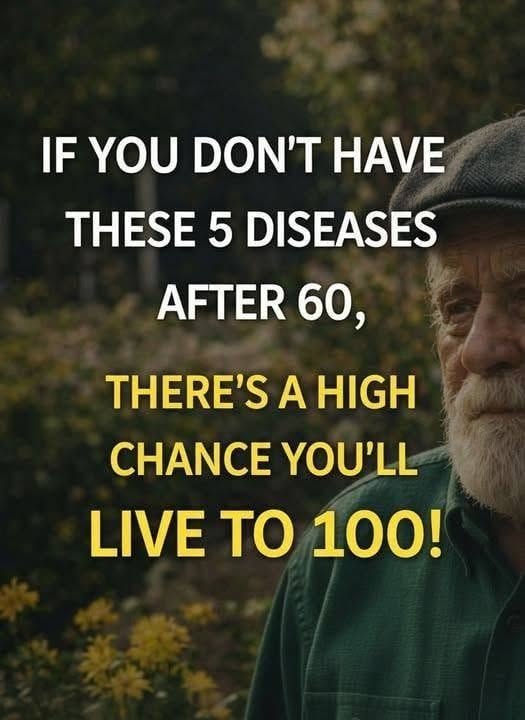
That claim is overly simplified and misleading. No set of “5 diseases” guarantees whether someone will live to 100. Longevity depends on many factors: genetics, lifestyle, healthcare access, infections, accidents, and environment—not just whether you’ve avoided a few conditions by age 60.
That said, researchers do look at certain major chronic diseases that strongly affect lifespan. Avoiding them generally improves your chances of living longer.
🧠 The 5 major disease groups usually meant in these posts
These are often the conditions implied:
1) Heart disease
Coronary artery disease
- Leading cause of death worldwide
- Strongly linked to smoking, diet, inactivity, and diabetes
2) Stroke
Stroke
- Can cause long-term disability or death
- Risk increases with high blood pressure and diabetes
3) Cancer
Cancer
- Risk increases with age
- Some types are preventable, many are not fully predictable
4) Diabetes
Diabetes mellitus
- Increases risk of heart disease, kidney failure, nerve damage
- Can be managed but not “ignored”
5) Chronic lung disease
Chronic obstructive pulmonary disease
- Strongly linked to smoking and pollution
- Gradually reduces oxygen capacity and stamina
📊 What science actually says
- Avoiding major chronic diseases does increase life expectancy
- But it does not guarantee extreme longevity (like 100 years)
- Many people who reach 90–100 also rely on:
- Genetics (strong family history)
- Healthy weight and activity
- Low smoking/alcohol exposure
- Good cardiovascular health
⚠️ What the viral claim gets wrong
- Implies a “magic checklist” for long life
- Ignores randomness (accidents, infections, cancer types)
- Oversimplifies aging biology
🧭 Real takeaway
A more accurate version would be:
Avoiding major chronic diseases significantly improves your chances of living longer—but it does not guarantee reaching 100.