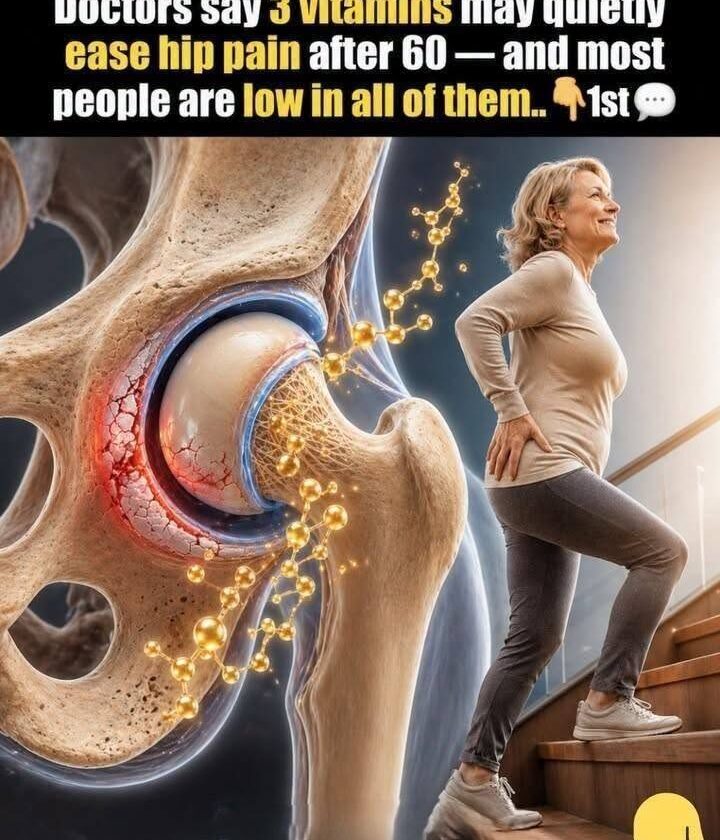
Let’s break it down clearly.
🦴 What hip arthritis actually is
Most hip arthritis is Osteoarthritis, a condition where:
- cartilage slowly wears down
- joints become stiff and painful
- inflammation develops around the joint
There is currently no vitamin or supplement that “reverses” cartilage loss in a proven way.
💊 “Medication treats the signal, not the cause”
This part is partly true but oversimplified:
- Painkillers (like NSAIDs) mainly reduce pain and inflammation
- They don’t rebuild cartilage
But they are still important because they:
- improve mobility
- reduce inflammation
- help people stay active (which actually protects joints long-term)
So they’re not “missing the cause”—they’re managing symptoms while we don’t yet have a true cure.
🧪 “3 vitamins that reach what painkillers never do”
This claim is where it becomes misleading.
Some vitamins are important for joint health, but they:
- do not directly replace painkillers
- do not rebuild hip cartilage in advanced arthritis
- have modest or supportive effects at best
Commonly mentioned ones are:
🟡 Vitamin D
Helps bone strength and muscle function. Low levels are linked with worse joint outcomes.
🟡 Vitamin C
Important for collagen formation (connective tissue support), but does not reverse arthritis damage.
🟡 Vitamin K
May support bone metabolism, but evidence for arthritis improvement is limited.
🧠 What actually helps hip arthritis most (evidence-based)
For Osteoarthritis, the strongest-supported approaches are:
- regular low-impact exercise (walking, swimming, cycling)
- weight management (reduces joint load)
- physiotherapy and strengthening
- anti-inflammatory medications when needed
- in advanced cases, joint injections or surgery
⚠️ Bottom line
- Vitamins can support general joint and bone health
- But they do not replace medical treatment or “reach the cause” of arthritis
- Headlines like that are usually designed to sell supplements, not reflect clinical evidence
If you want, I can show you which supplements actually have some evidence for joint pain (and which are mostly waste of money)—that list is surprisingly different from common ads.