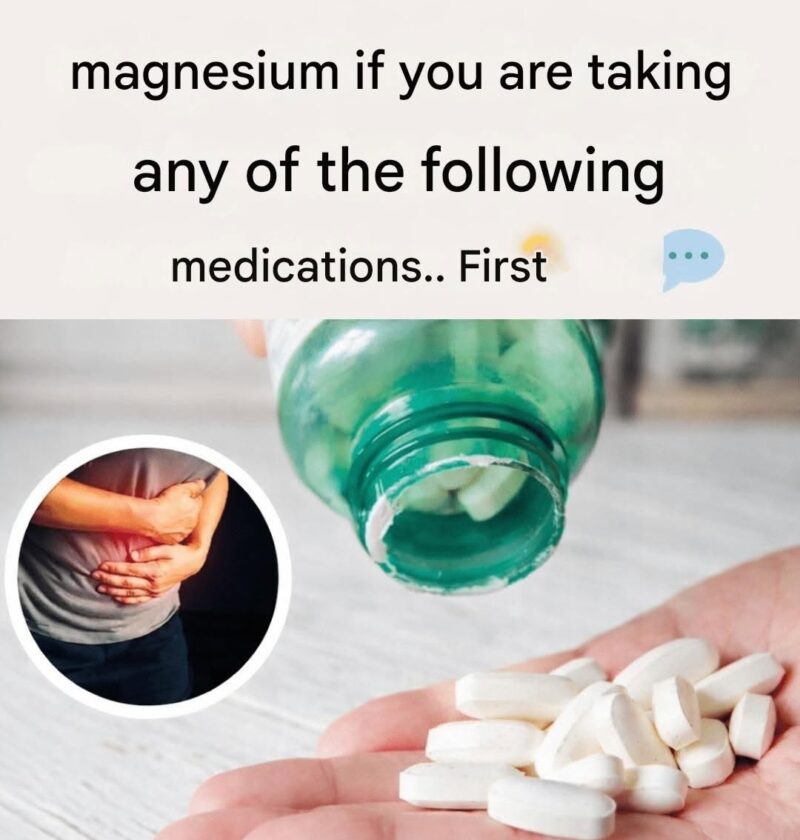
Here are the real, evidence-based interactions people are usually referring to:
1. Some antibiotics (most important interaction)
Magnesium can bind to certain antibiotics in the gut and reduce absorption.
Examples:
- Tetracyclines (e.g., doxycycline)
- Fluoroquinolones (e.g., ciprofloxacin, levofloxacin)
What to do:
Take magnesium and these antibiotics several hours apart (often 2–6 hours, depending on the drug).
2. Thyroid medication
- Levothyroxine (for hypothyroidism)
Magnesium can reduce absorption if taken together.
What to do:
Separate by at least 4 hours.
3. Osteoporosis medications (bisphosphonates)
Examples:
- Alendronate
Magnesium can block absorption.
What to do:
Usually take bisphosphonates on an empty stomach first, and avoid minerals like magnesium around that time.
4. Certain heart and blood pressure medications (indirect issues)
Magnesium may enhance effects of some drugs that already lower blood pressure or affect heart rhythm, especially in high doses or kidney disease.
This is usually monitoring-based, not an automatic “never use.”
5. Kidney disease (important safety point)
Not a drug interaction, but crucial:
- If kidneys don’t function well, magnesium can build up in the body
- This can become dangerous at high doses
Bottom line
- Magnesium is generally safe and widely used
- Problems are mostly about absorption timing or specific medical conditions
- The word “NEVER” in headlines like this is inaccurate
If you want, tell me the medication you’re seeing mentioned in that post—I can check the actual interaction risk for that exact drug.