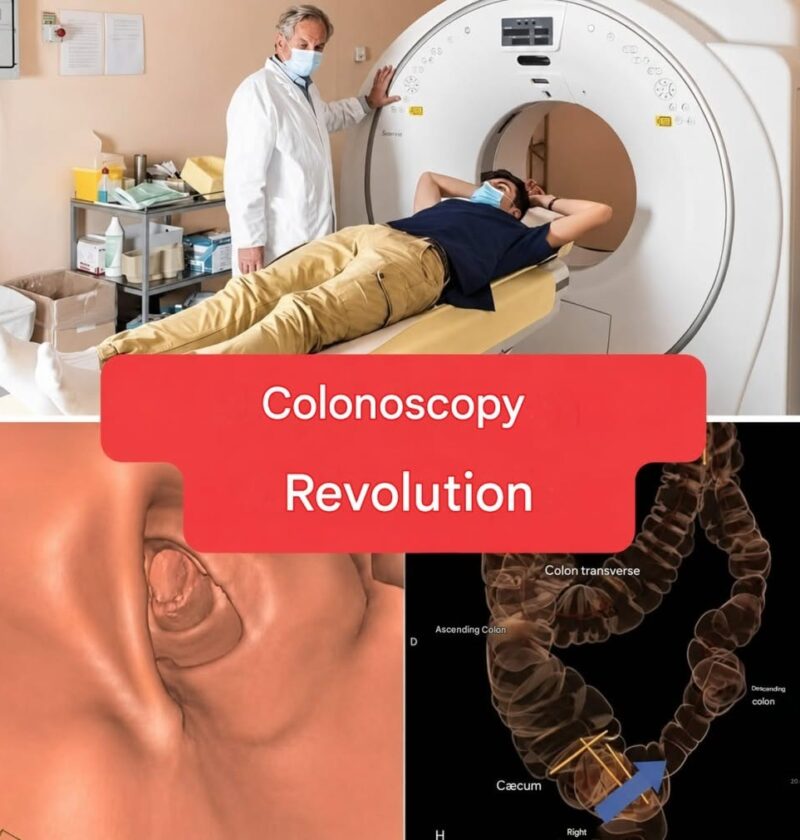
What a colonoscopy actually is
A colonoscopy involves a doctor inserting a flexible camera tube into the rectum to examine the colon. It is considered invasive because it enters the body through a natural opening and physically inspects internal organs.
It is used to detect:
- colon cancer
- polyps
- bleeding causes
- inflammatory bowel disease
Why you’re seeing claims like “no longer invasive”
These usually refer to new or alternative screening methods, such as:
1. Virtual colonoscopy (CT colonography)
A CT scan creates images of the colon without a camera tube going inside the full length of the bowel.
- Less invasive
- Still requires bowel preparation
- If something is found, a real colonoscopy is still needed
CT Colonography
2. Stool-based tests
Tests like FIT or DNA stool tests check for hidden blood or cancer markers.
- Completely non-invasive
- Good for screening
- Cannot remove or biopsy polyps
Fecal Immunochemical Test
3. Capsule endoscopy (limited use)
A swallowable camera capsule can image parts of the GI tract, but it is not a full replacement for colonoscopy yet.
Capsule Endoscopy
Key truth
- Traditional colonoscopy = still the gold standard and still invasive
- New methods = less invasive screening options, not full replacements
Bottom line
The headline is likely trying to promote a newer technique or exaggerate progress. In medicine, improvements usually mean:
“less invasive alternatives exist”
not
“the standard procedure is no longer invasive”
If you want, I can explain which test is best for colon cancer screening depending on age and risk, or how uncomfortable a modern colonoscopy actually is compared to what people imagine.