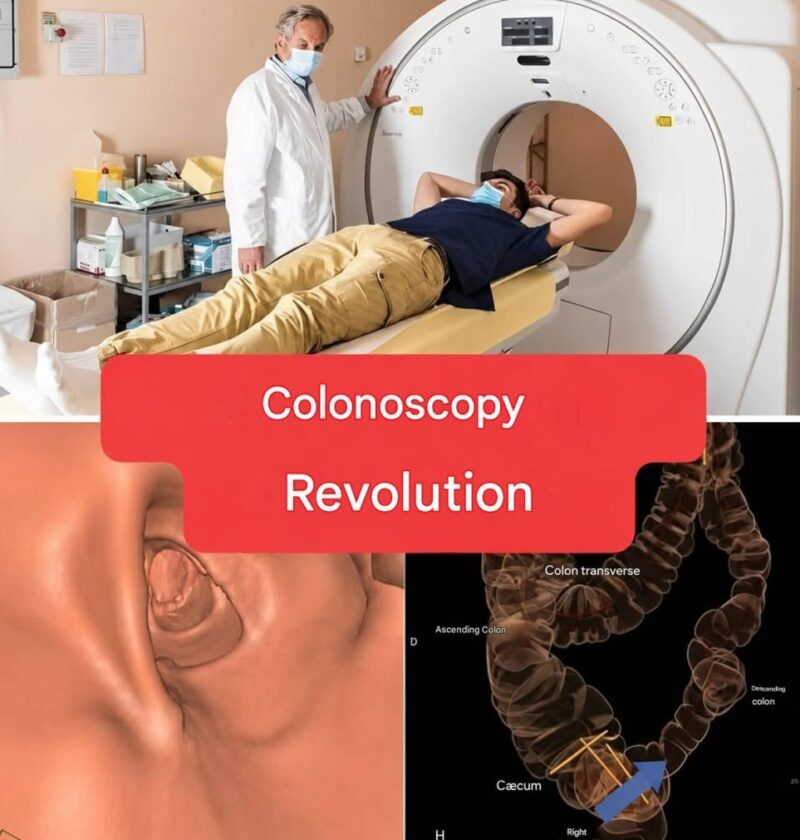
There are promising new technologies, but they have not replaced standard colonoscopy.
One example is colon capsule endoscopy, where a person swallows a pill-sized camera that takes pictures as it travels through the digestive tract. This approach is less invasive and can be useful in certain situations, but it has important limitations.
Standard colonoscopy remains the preferred test in many cases because it allows doctors to:
- Detect abnormalities.
- Remove polyps during the same procedure.
- Take tissue biopsies for diagnosis.
- Treat some sources of bleeding immediately.
A capsule camera can identify some abnormalities, but if it finds a suspicious lesion or polyp, a conventional colonoscopy is often still needed for confirmation or treatment.
So, while less invasive alternatives are becoming more advanced and may reduce the need for colonoscopy in selected patients, they have not made colonoscopy obsolete. Claims that colonoscopy “will no longer be an invasive examination” overstate the current state of medical practice.