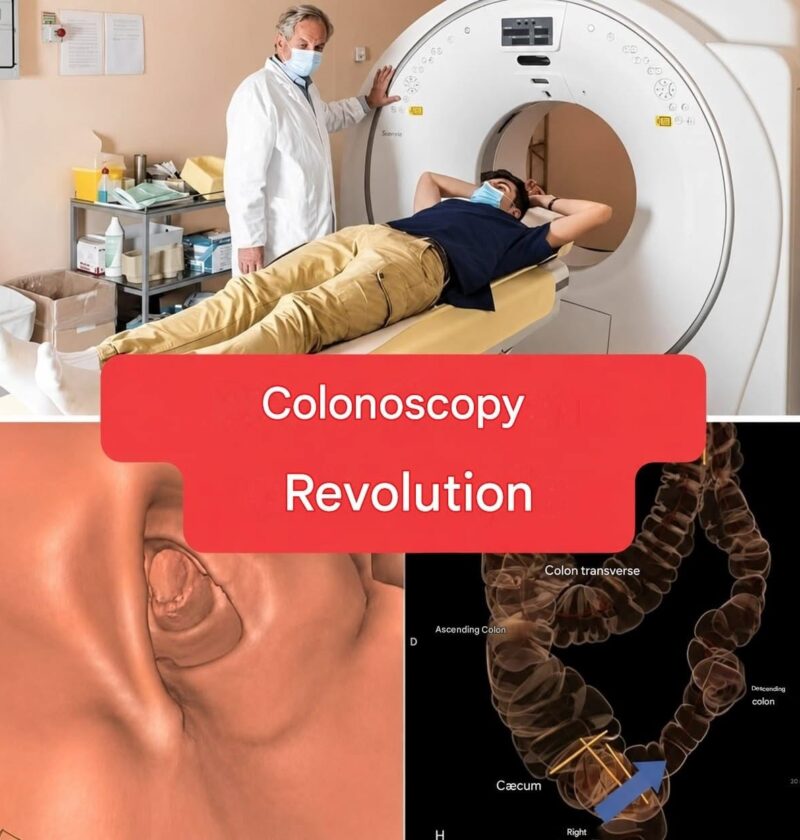
The headline “New method: colonoscopy will no longer be an invasive examination” refers to developments in colorectal cancer screening, but it can be misleading. Colonoscopy has not been replaced entirely and is still considered one of the most effective ways to examine the colon because it allows doctors to find and remove precancerous polyps during the same procedure.
However, there are newer less invasive screening options that may be appropriate for some people.
Newer or less invasive alternatives include:
🧪 Stool-based tests
These look for signs of cancer or bleeding in stool samples.
- Fecal immunochemical test (FIT):
- Detects hidden blood in stool.
- Usually done at home.
- Typically repeated regularly.
- Stool DNA tests:
- Look for DNA changes associated with colorectal cancer along with blood markers.
- Also done at home.
🖥️ CT colonography (“virtual colonoscopy”)
- Uses CT imaging to create pictures of the colon.
- Does not require inserting a traditional colonoscope.
- Still usually requires bowel preparation.
- If a suspicious polyp is found, a traditional colonoscopy may still be needed for removal or biopsy.
🩸 Blood-based screening tests
Blood tests for colorectal cancer detection are being developed and introduced in some settings. These may improve screening options in the future, but they do not currently replace colonoscopy for all patients.
Why colonoscopy is still important
Colonoscopy:
- Allows direct viewing of the entire colon.
- Can detect small polyps.
- Allows immediate removal of many polyps before they become cancerous.
Who should be screened?
Screening recommendations vary by country and personal risk factors, but many average-risk adults begin colorectal cancer screening around age 45. People with symptoms or higher risk may need earlier or more frequent evaluation.