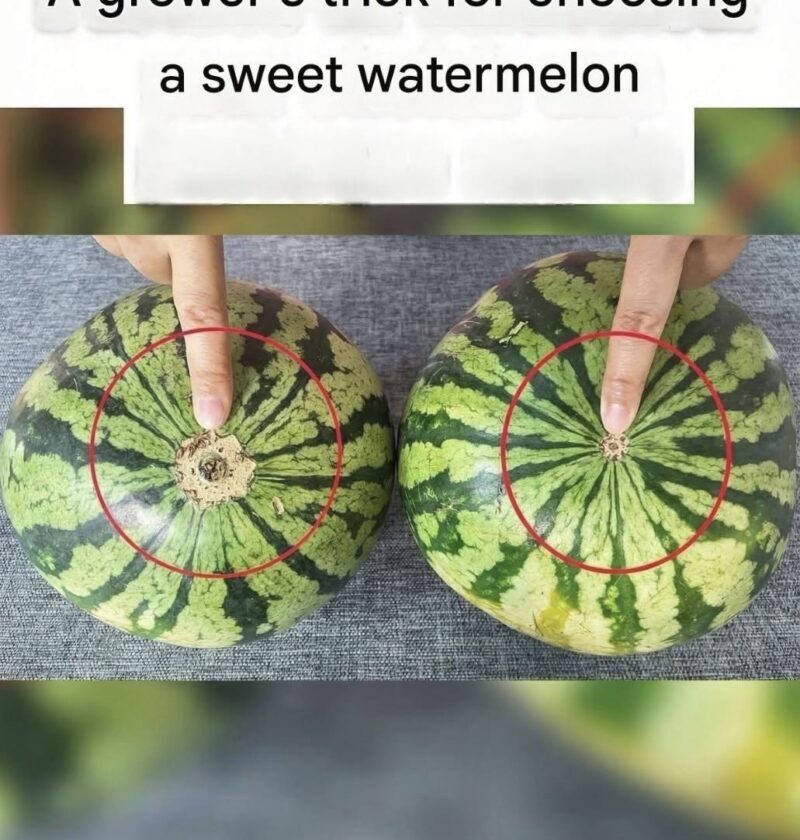
How to Pick a Sweet, Ripe Watermelon 🍉
There isn’t a 100% foolproof visual test for sweetness, because sugar content can’t be seen from the outside. But several external clues can improve your odds considerably.
Look for a large creamy-yellow field spot. This is the area that rested on the ground. A mature watermelon often develops a yellow or golden-yellow spot as it ripens. A white or very pale spot can indicate it was picked earlier.
Choose a dull, rather than shiny, rind. A glossy appearance can indicate a less mature melon; a more matte rind is often associated with ripeness.
Look for brown webbing or “sugar spots.” These rough, web-like markings are sometimes associated with pollination and can occur on ripe, sweet melons—but they’re not a guarantee of sweetness.
Pick one that feels heavy for its size. A watermelon with plenty of water inside tends to feel surprisingly heavy.
Check the shape. A symmetrical, evenly developed melon is generally a safer choice than one with pronounced irregularities, dents, or soft spots.
Don’t rely on the stem alone. A dried stem can indicate that the melon has been off the vine for some time, but it doesn’t reliably tell you how sweet it is.
The best quick test
If you’re choosing between several watermelons, I’d prioritize:
large yellow field spot + heavy for its size + firm, symmetrical shape.
And don’t waste time trying to find the mythical “perfect sound” by knocking on it—the tapping test is much less reliable than people often claim.
If the market allows you to taste samples, that’s by far the most reliable way to judge sweetness. 🍉