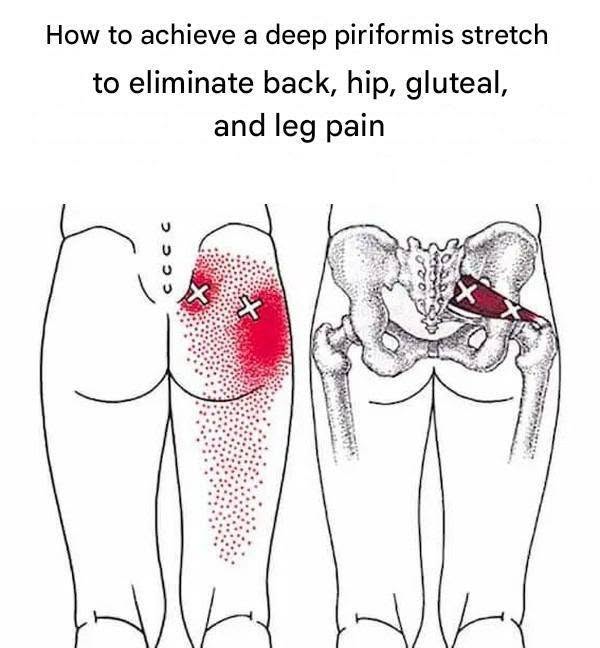
Piriformis Stretches to Relieve Piriformis Syndrome
Piriformis syndrome occurs when the piriformis muscle (a small muscle located deep in the buttock) becomes tight, irritated, or spasms and may put pressure on the nearby sciatic nerve, causing pain in the buttock and sometimes tingling or discomfort down the leg. Gentle stretching and mobility exercises may help reduce tension and improve movement.
1. Supine Piriformis Stretch (Figure-4 Stretch)
How to do it:
- Lie on your back with both knees bent.
- Place your right ankle over your left knee, forming a “4” shape.
- Hold behind your left thigh and gently pull it toward your chest.
- You should feel a stretch in your right buttock.
- Hold for 20–30 seconds and repeat 2–3 times per side.
2. Seated Piriformis Stretch
How to do it:
- Sit upright in a chair.
- Place one ankle over the opposite knee.
- Keep your back straight and gently lean forward.
- Hold when you feel a stretch in the buttock.
- Hold for 20–30 seconds, then switch sides.
3. Pigeon Pose (Modified)
How to do it:
- Start on your hands and knees.
- Bring one knee forward and place the leg comfortably in front of you.
- Extend the other leg behind you.
- Keep your hips level and slowly lower your upper body if comfortable.
- Hold for 20–30 seconds.
4. Lying Hip External Rotation Stretch
How to do it:
- Lie on your back with knees bent.
- Let one knee gently fall across your body toward the opposite side.
- Keep your shoulders relaxed on the floor.
- Hold the stretch for 20–30 seconds.
5. Knee-to-Opposite-Shoulder Stretch
How to do it:
- Lie on your back.
- Bring one knee toward your chest.
- Guide it gently toward the opposite shoulder.
- Hold for 20–30 seconds and repeat.
Tips for Safer Stretching
- Stretch gently; avoid forcing painful movements.
- Breathe normally and avoid bouncing.
- Perform stretches consistently rather than aggressively.
- Warm muscles (for example, after light walking) often stretch