Main causes
Epidermoid (commonly called “sebaceous”) cysts can develop due to:
- A blocked hair follicle or skin pore.
- Damage or trauma to the skin.
- Trapped skin cells that continue to multiply inside a sac beneath the skin.
- Less commonly, certain inherited conditions.
These cysts commonly appear on the face, neck, scalp, back, or trunk.
Symptoms
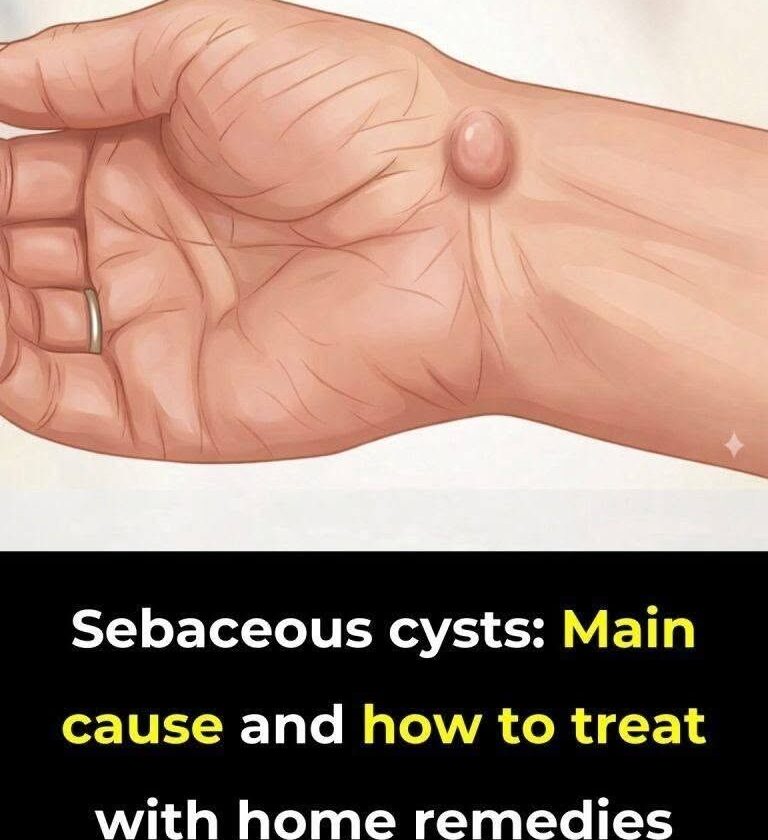
- A small, round lump beneath the skin.
- Slow growth over months or years.
- Usually painless unless inflamed or infected.
- Sometimes a small central opening (punctum).
- A thick, white, cheesy-smelling material may drain if the cyst ruptures.
Home care
If the cyst is not infected and isn’t causing problems:
- Apply a warm compress for 10–15 minutes, several times a day, to encourage drainage if appropriate.
- Keep the area clean.
- Avoid squeezing, popping, or cutting the cyst yourself, as this can increase the risk of infection and scarring.
When to see a healthcare professional
Seek medical advice if the cyst:
- Becomes red, warm, swollen, or very painful.
- Drains pus or has a foul-smelling discharge.
- Grows rapidly or becomes very large.
- Repeatedly returns after draining.
- Interferes with daily activities or is cosmetically bothersome.
- Has an uncertain diagnosis.
A clinician may recommend draining the cyst if it’s infected or inflamed, or surgically removing the entire cyst wall to reduce the chance of it coming back.
A note about “home remedy solutions”
There is no home remedy that reliably removes a cyst permanently. Warm compresses may help relieve discomfort or encourage drainage, but the cyst lining usually remains. The only definitive treatment for a bothersome cyst is complete removal by a qualified healthcare professional.
If you’re unsure whether a lump is a cyst or you’ve noticed changes such as rapid growth, persistent pain, bleeding, or ulceration, it’s important to have it examined to rule out other conditions.