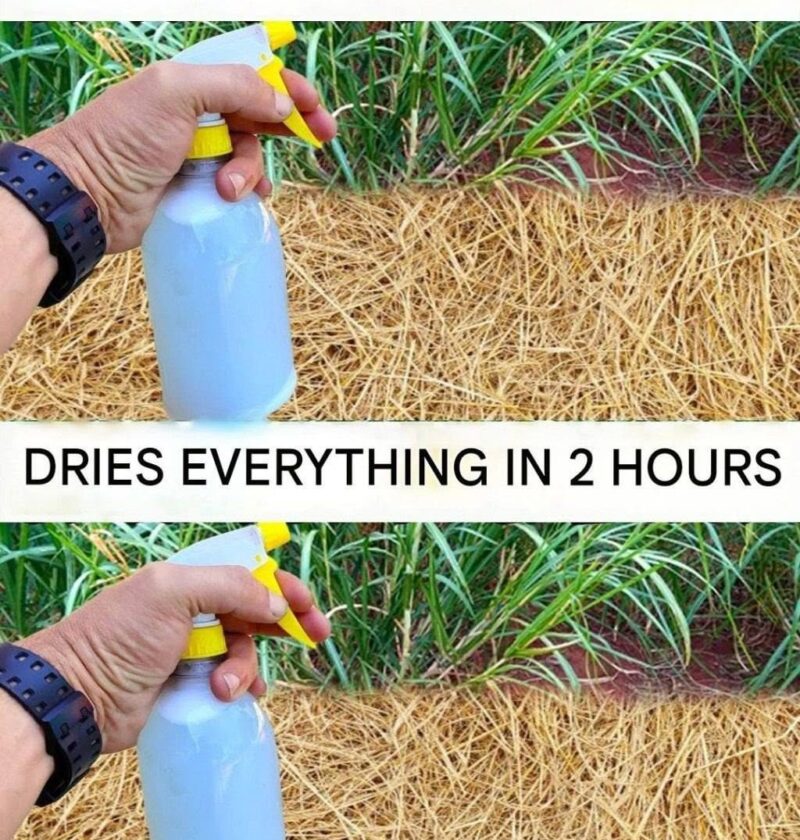
The headline “The best homemade weed killer: no poison (dries everything in 2 hours)” is a common gardening claim, but it is often exaggerated. Homemade weed killers may damage or dry out plant leaves, but they usually do not kill the entire weed permanently, especially if the roots survive.
A common DIY mixture people mention is:
- Vinegar (acetic acid)
- Dish soap
- Sometimes salt
What the ingredients actually do
- Vinegar: Can burn and dry the leaves of many weeds. Stronger horticultural vinegar works better than household vinegar, but it can still harm nearby plants.
- Dish soap: Helps the liquid spread and stick to leaves; it does not kill weeds by itself.
- Salt: Can kill plants by disrupting water balance, but it can also damage soil and prevent future plant growth in the treated area.
Important cautions
- Avoid spraying on lawns, flower beds, or near plants you want to keep.
- Vinegar mixtures work best on young, actively growing weeds on sunny days.
- They are less effective on deep-rooted perennial weeds, which often grow back.
- “Non-toxic” does not mean harmless—some homemade mixtures can harm soil, insects, pets, or surrounding plants.
Safer weed-control methods
- Pull weeds after rain when the soil is soft.
- Use mulch to block sunlight and reduce new growth.
- Use targeted weed treatments according to label instructions when needed.
A weed killer that “dries everything in 2 hours” is usually acting as a leaf burner, not a guaranteed root-killing solution.