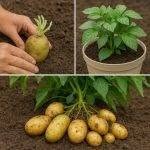
🥔 The Secret to Growing Potatoes at Home Early — and Getting a Bigger Harvest
There isn’t one magic ingredient that makes potatoes produce dozens of tubers. The best results come from choosing an early variety, starting healthy seed potatoes correctly, giving them fertile soil, and keeping moisture consistent. (RHS)
🌱 1. Start with certified seed potatoes
Use disease-free seed potatoes rather than supermarket potatoes whenever possible. Choose an early or first-early variety if your priority is harvesting sooner. Early potatoes can be ready in roughly 7–10 weeks, depending on variety and growing conditions. (University of Minnesota Extension)
☀️ 2. “Chit” them before planting
Chitting means allowing the seed potatoes to develop short, sturdy shoots before planting.
- Place potatoes eyes upward in an egg carton.
- Keep them somewhere bright, cool and frost-free.
- Plant when the shoots are roughly 2–5 cm long.
- This is particularly useful for early varieties because it gives them a head start. (RHS)
🥔 3. Give the plants plenty of room
Plant in loose, well-drained soil with good sunlight. Crowding can reduce the size of individual tubers; closer spacing tends to produce smaller potatoes, while wider spacing favors larger tubers. (University of Minnesota Extension)
🌿 4. The important trick: hill or earth up
As the shoots grow, gradually mound soil around the plants while leaving the upper foliage exposed.
This gives developing tubers more protected soil and prevents potatoes near the surface from being exposed to sunlight and turning green. (Yard and Garden)
Don’t bury the entire plant at once. Add soil progressively as it grows.
💧 5. Keep moisture consistent
Potatoes particularly need reliable moisture while the tubers are developing. Repeated cycles of very dry soil followed by heavy watering can produce misshapen or cracked potatoes and reduce yield. (Yard and Garden)
🌾 6. Feed the soil—but don’t overdo nitrogen
Potatoes are relatively hungry crops. Incorporating organic matter and using an appropriate vegetable fertilizer can support good growth. However, excessive nitrogen can encourage leaves rather than the desired tuber production.
🪣 An excellent option for small gardens
Potatoes also grow well in large containers or grow bags with good drainage. You can start with a layer of growing medium, plant the seed potatoes, and add more medium as the stems grow. (RHS)
⏰ When to harvest
For new potatoes, you can begin harvesting while the plant is still green once the variety has reached its expected maturity. For mature storage potatoes, wait until the foliage has died back. (University of Minnesota Extension)
⭐ The simple formula
Early variety + healthy seed potatoes + chitting + sunny location + fertile, loose soil + regular water + gradual hilling = earlier, healthier and more productive potato plants.
One important correction to viral gardening advice: adding more and more soil does not magically make an indeterminate potato produce unlimited layers of potatoes. Hilling is valuable, but variety, plant health, spacing, nutrition and growing conditions have a major influence on the final harvest. (University of Minnesota Extension)