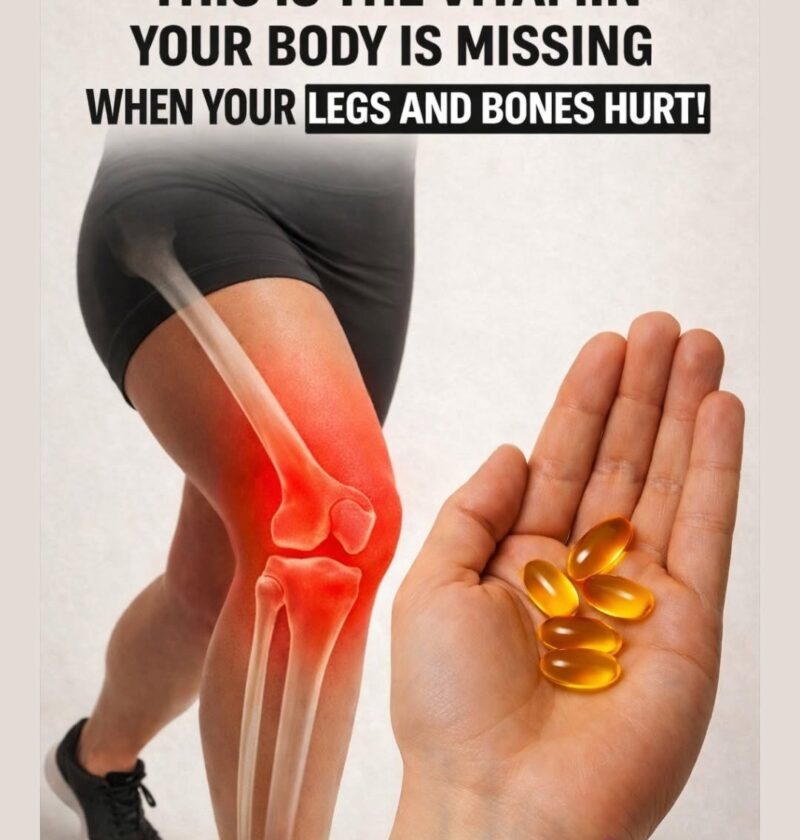
🦴 “This Is the Vitamin Your Body Is Missing When Your Legs and Bones Hurt”
The vitamin most commonly associated with bone pain and muscle weakness is vitamin D. A significant deficiency can impair calcium and phosphorus metabolism and, in adults, cause osteomalacia, which may produce bone pain, muscle weakness and difficulty walking or climbing stairs. (nhs.uk)
What symptoms can occur with low vitamin D?
Possible symptoms include:
- Aching bones, particularly in the back, hips or legs
- Muscle weakness
- Muscle aches
- Difficulty climbing stairs or getting out of a chair
- Increased risk of falls and fractures when deficiency is severe or prolonged (nhs.uk)
☀️ Where does vitamin D come from?
Sources include sunlight, fatty fish, egg yolks and vitamin-D-fortified foods. Supplements can be useful when someone is deficient or at increased risk of deficiency. (nhs.uk)
⚠️ But leg or bone pain doesn’t automatically mean vitamin D deficiency
Pain can also come from arthritis, nerve problems, circulation disorders, injuries, medications and many other conditions. A blood test for 25-hydroxyvitamin D can help determine whether vitamin D deficiency is actually present.
Don’t take large doses of vitamin D simply because your legs hurt. Excessive supplementation can itself cause health problems.
Bottom line: Vitamin D deficiency can cause bone pain and muscle weakness, but pain alone isn’t proof that you’re deficient. If the pain is persistent, severe, or accompanied by weakness or difficulty walking, it’s worth getting medically evaluated.