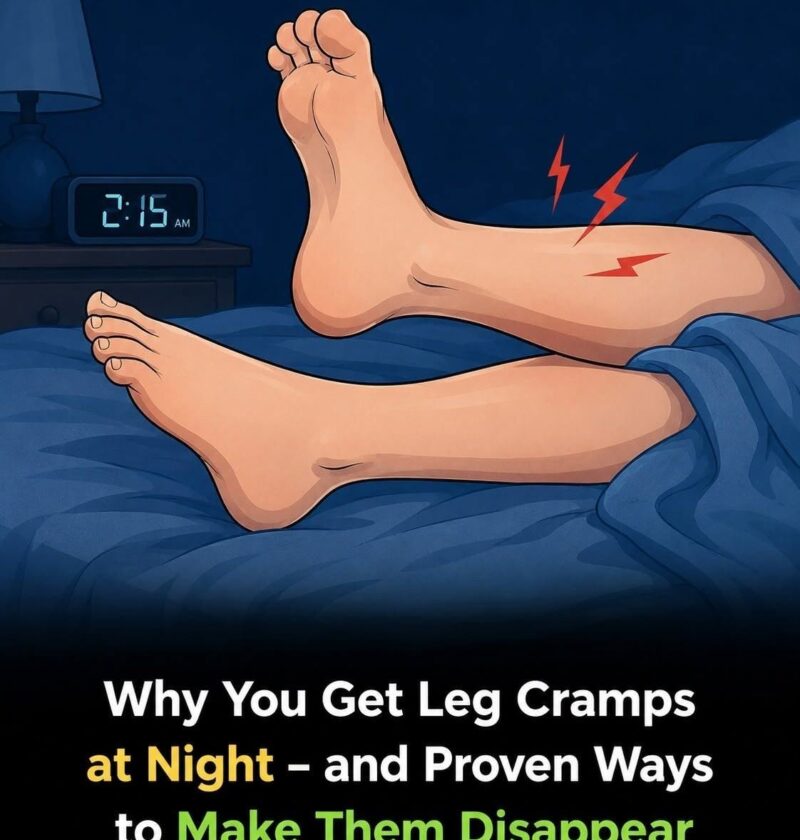
The headline “This is why we get cramps at night” is a common health teaser. The truth is that night-time leg cramps are very common, especially as people get older, and in many cases there is no single identifiable cause.
Possible reasons include:
- Muscle fatigue or overuse – after exercise, prolonged standing, or unusual activity.
- Ageing – night cramps become more common with age.
- Dehydration – not drinking enough fluids can contribute in some people.
- Sitting or standing for long periods – staying in one position may increase the likelihood of cramps.
- Pregnancy – particularly in the second and third trimesters.
- Certain medications – such as some diuretics (“water tablets”), although medication is not the cause in most cases.
- Underlying medical conditions – including diabetes, kidney disease, thyroid disorders, nerve disorders, or poor circulation in some people.
Are they caused by low magnesium?
This is a common claim, but the evidence is mixed.
- If you have a true magnesium deficiency, replacing it can help.
- However, for most people with ordinary night cramps, studies have not shown that magnesium supplements consistently reduce cramps.
- Low potassium or calcium can also contribute in some situations, but these are not the most common cause.
What may help
- Stretch your calf and hamstring muscles before bed.
- Stay adequately hydrated.
- Keep physically active, but avoid sudden increases in exercise.
- Stretch the affected muscle and gently massage it when a cramp occurs.
When to seek medical advice
See a healthcare professional if:
- Cramps are severe, frequent, or waking you regularly.
- They are accompanied by muscle weakness, numbness, or swelling.
- They started after beginning a new medication.
- They affect only one leg and are associated with redness, warmth, or persistent pain.