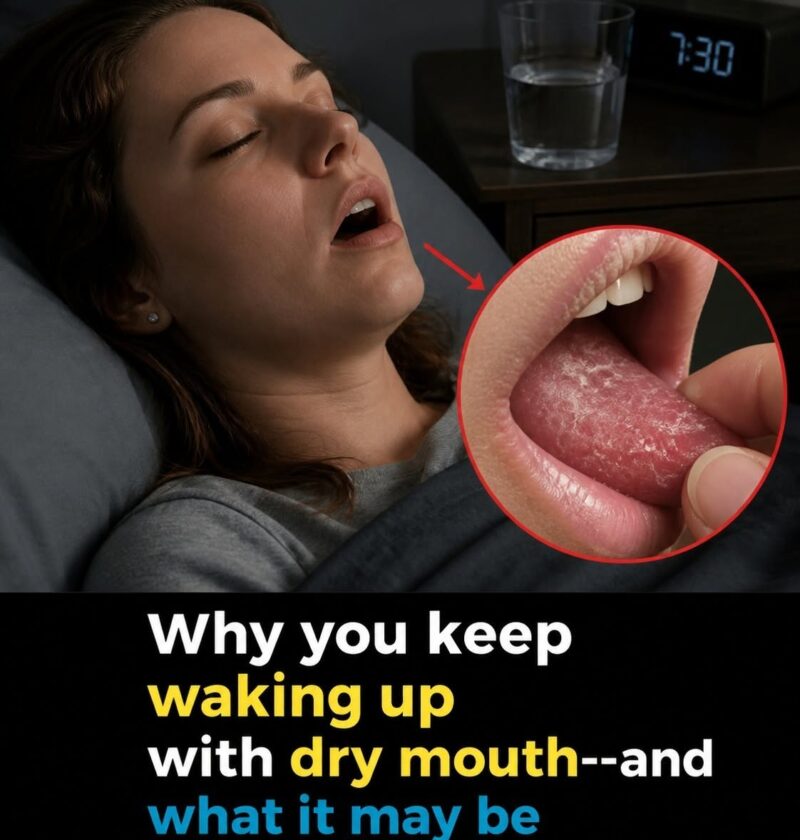
Waking up with a dry mouth is common, but it’s usually your body reacting to breathing, hydration, or sleep-related issues—not a single hidden disease.
The condition is called dry mouth (Xerostomia).
💤 What your body might be “telling you”
1) You’re breathing through your mouth at night
- Often due to a blocked nose (allergies, cold, sinus issues)
- Or habit while sleeping
➡️ This is the most common cause
2) You’re mildly dehydrated
- Not enough water during the day
- High caffeine intake (tea/coffee)
- Hot weather or sweating at night
➡️ Saliva production drops when fluids are low
3) Sleep apnea or snoring issues
- Airway partially blocked during sleep
- Leads to mouth breathing and dry mouth
➡️ May also cause morning headaches or tiredness
4) Medications or supplements
Some can reduce saliva, such as:
- Antihistamines
- Antidepressants
- Blood pressure medications
5) Blood sugar issues (less common but important)
Persistently dry mouth with:
- Excess thirst
- Frequent urination
➡️ Can be linked with diabetes (worth checking if persistent)
🚨 When to pay attention
See a doctor if dry mouth:
- Happens every night for weeks
- Comes with choking/snoring or fatigue
- Is paired with constant thirst or weight changes
🧠 Simple fixes you can try
- Drink water earlier in the day (not just at night)
- Treat nasal congestion if present
- Use a humidifier in dry environments
- Avoid caffeine late evening
- Sleep on your side instead of back
✔️ Bottom line
Most cases are harmless and lifestyle-related, especially mouth breathing or dehydration—but persistent symptoms can sometimes point to sleep or metabolic issues.
If you want, I can help you figure out the most likely cause based on your exact symptoms (snoring, thirst, meds, etc.).