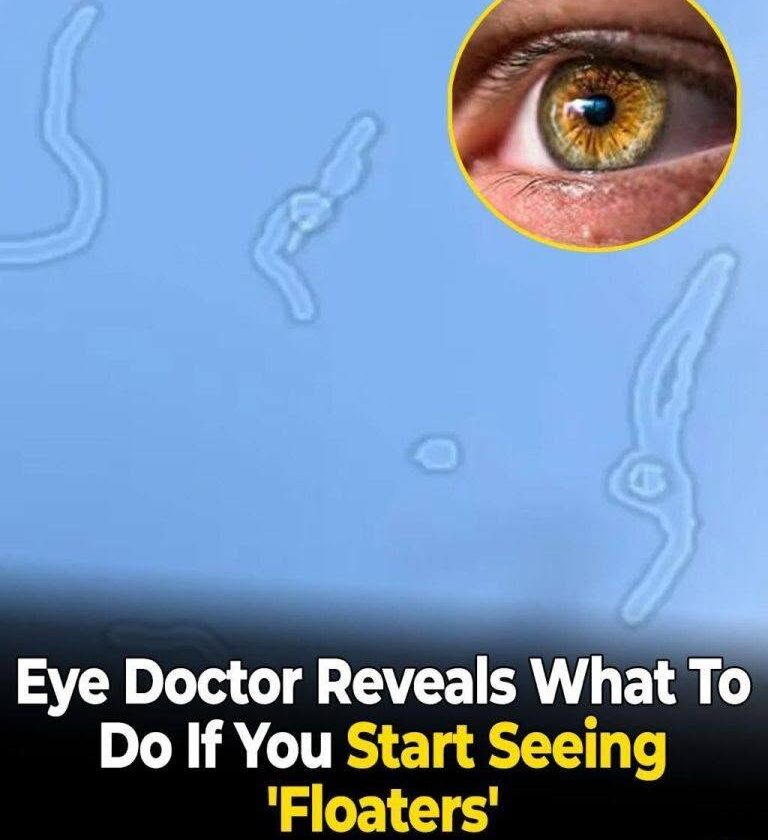
Eye floaters are small shapes—like dots, threads, cobwebs, or squiggly lines—that drift across your vision, especially when you look at a bright background (like a white wall or the sky).
They are usually caused by tiny clumps in the gel-like fluid inside the eye called the vitreous.
👁️ What are eye floaters?
Eye floaters
As we age:
- The vitreous gel inside the eye slowly becomes more liquid
- Tiny fibers clump together
- These cast shadows on the retina → you see “floaters”
🟡 Common symptoms
- Small dark spots moving with your vision
- Thread-like or cobweb shapes
- More noticeable against bright backgrounds
- Move when your eyes move, then drift away slowly
⚠️ When floaters are usually harmless
Most floaters are normal if:
- They are small and stable
- You’ve had them for a while
- There are no other vision changes
🚨 Warning signs (seek urgent eye care)
See an eye doctor immediately if you notice:
- Sudden increase in floaters
- Flashes of light in vision
- A “curtain” or shadow over part of vision
- Sudden loss of side vision
These may indicate:
- Retinal tear
- Retinal detachment
- Vitreous detachment complications
👁️ What eye doctors usually do
- Eye examination with pupil dilation
- Retinal check
- Monitoring if floaters are harmless
- Treatment only if serious (laser or surgery in rare cases)
🧠 Can you get rid of floaters?
Most of the time:
- They become less noticeable over time
- The brain learns to ignore them
In rare severe cases:
- Laser treatment or vitrectomy may be considered
🧾 Bottom line
Eye floaters are usually harmless age-related changes, but a sudden change in number, flashes of light, or vision loss can be a medical emergency.
If you want, I can also explain how to tell normal floaters from dangerous retinal detachment symptoms in a simple checklist.