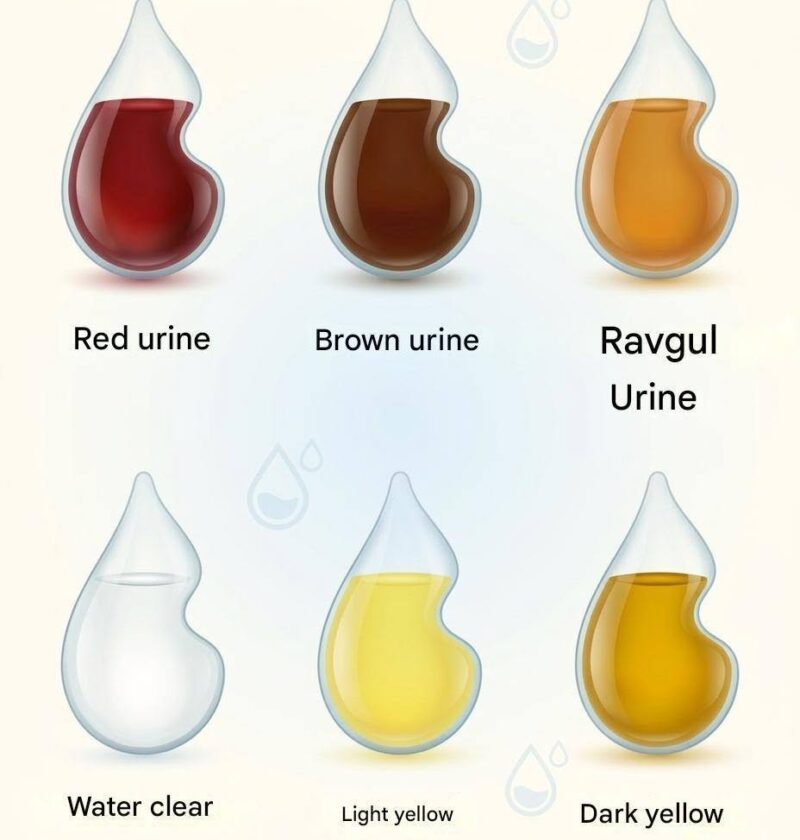
The color of your urine can give useful clues about hydration and sometimes overall health—but it’s not a diagnostic test on its own.Here’s a simple, medically accurate guide:
💧 Clear to very light yellow
- Usually normal
- You’re likely well hydrated
- If always completely clear, you might be drinking more water than needed
🌟 Light straw / pale yellow (ideal)
- Best sign of healthy hydration
- Normal for most people
🌼 Dark yellow / amber
- Often means mild dehydration
- You may need more fluids
🍯 Honey or deep yellow
- More significant dehydration
- Common after sweating, illness, or low fluid intake
🧡 Orange urine
Possible causes:
- Dehydration
- Certain medications or vitamins (especially B vitamins)
- Sometimes liver or bile-related issues if persistent
If it continues, it should be checked.
🍷 Pink or red urine
Possible causes:
- Food (beets, berries)
- Blood in urine (important to rule out)
- Urinary tract infection or kidney issues
If not clearly food-related, it needs medical attention.
🟤 Brown or cola-colored
Possible causes:
- Severe dehydration
- Liver or kidney problems
- Muscle breakdown (rare but serious)
This should be evaluated promptly if persistent.
⚪ Cloudy urine
Possible causes:
- Urinary tract infection
- Dehydration
- Certain crystals or diet factors
⚠️ Important note
Urine color can be affected by:
- Water intake
- Vitamins and supplements
- Foods (like beets or asparagus)
- Medications
🧠 Key takeaway
- Pale yellow = healthy hydration
- Sudden or persistent unusual colors (especially red, brown, or orange) should be checked if not clearly explained by diet or supplements
If you want, tell me a specific urine color you’ve noticed, and I can help interpret it more precisely.