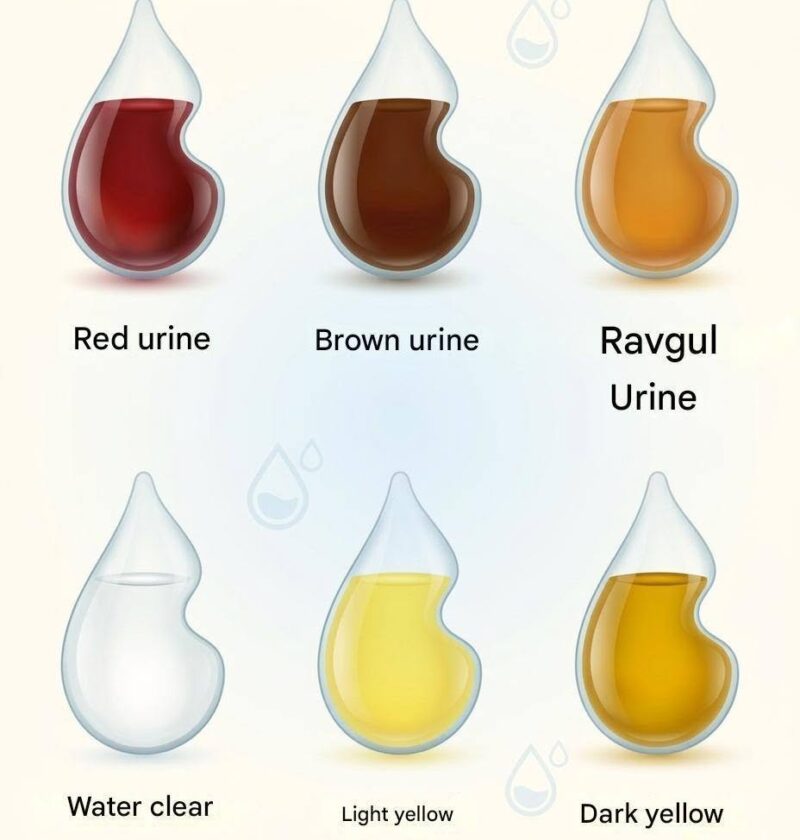
Urine color can give quick clues about hydration and sometimes health—but it’s not a diagnosis on its own. Diet, supplements, and medications can also change it.
Here’s a clear guide:
💧 🟡 Pale yellow (straw-colored)
✔️ Ideal / healthy
- Well hydrated
- Normal kidney function in most cases
💦 Clear urine
✔️ Usually fine, but:
- You may be overhydrated
- If constant, you might be drinking more water than needed
🌕 Dark yellow / amber
⚠️ Mild dehydration
- Not enough fluids
- Common in morning urine or after sweating
👉 Drink more water
🍯 Honey / orange color
⚠️ Can indicate:
- Dehydration
- Certain medications
- Possible liver or bile issues (if persistent)
👉 If it continues, consider medical advice
🍷 Pink or red
🚨 Needs attention
Possible causes:
- Blood in urine
- Urinary tract infection (UTI)
- Kidney stones
- Certain foods (beets, berries)
👉 If not food-related, see a doctor
🟤 Brown or cola-colored
🚨 More concerning
Possible causes:
- Liver problems
- Severe dehydration
- Muscle breakdown (rare but serious)
👉 Medical evaluation recommended
🟢 Blue or green (rare)
Unusual, often caused by:
- Certain medications or dyes
- Rare infections
🧠 Important context
Urine color can change due to:
- Vitamins (especially B-complex → bright yellow)
- Foods (beets, asparagus)
- Medications
- Exercise and sweating
🚨 When to seek help
- Blood-colored urine not linked to food
- Persistent dark or brown urine
- Pain, burning, fever, or frequent urination
💡 Simple rule
- Light yellow = good
- Dark = drink more water
- Red/brown (not food-related) = check it out
If you want, tell me your urine color and any symptoms, and I can help you interpret it more specifically.