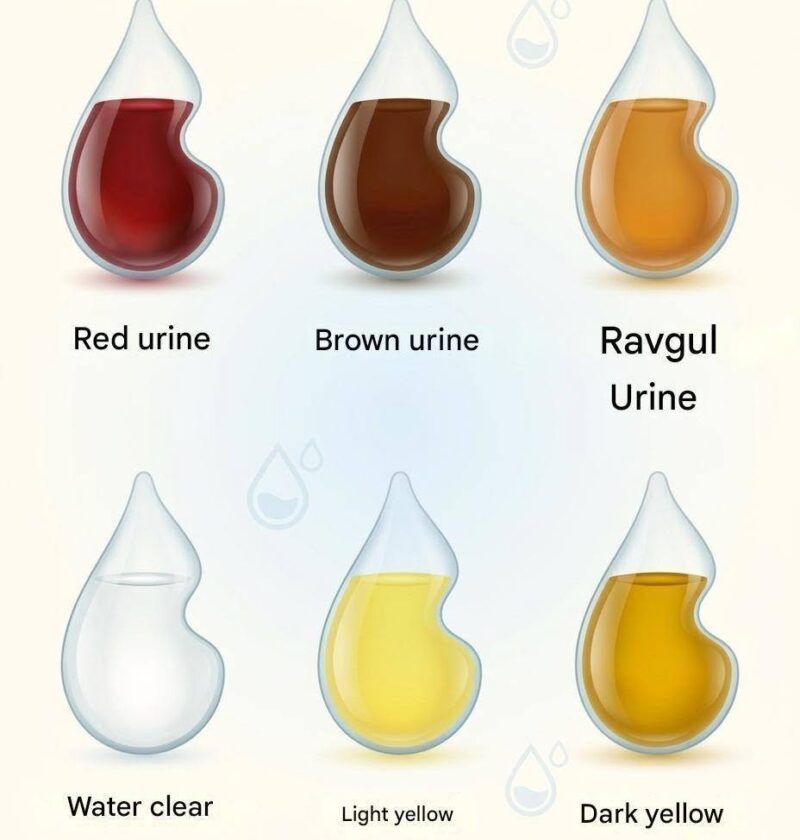
The color of your urine can provide clues about hydration and some health conditions, but it is not a diagnosis by itself. Many factors—including foods, vitamins, medications, and how concentrated your urine is—can change its appearance.
Common urine colors and what they may mean
🟡 Pale yellow to light straw
- Usually a sign of good hydration.
- Often considered a normal range.
🟨 Dark yellow or amber
- Often means your urine is more concentrated, which may happen when you need more fluids.
- It can also occur after sweating, exercise, or not drinking enough water.
⚪ Very clear/transparent
- May mean you are drinking a lot of fluids.
- Constantly clear urine can sometimes indicate excessive fluid intake.
🟤 Dark brown or tea-colored
- Can be caused by dehydration, certain medications, or some liver or muscle-related conditions.
- If it persists or occurs with other symptoms, it should be checked.
🔴 Pink or red
- May come from foods like beets, some medications, or blood in the urine.
- Blood in urine should be evaluated, especially if it is unexplained.
🟠 Orange
- Can be related to dehydration, medications, or sometimes liver or bile-related issues.
🔵 Blue or green
- Uncommon; may be caused by certain dyes, medications, or rare medical conditions.
When to seek medical advice
Contact a healthcare professional if you notice:
- Blood in your urine.
- Persistent unusual color without an obvious cause.
- Cloudy urine with burning, fever, or pelvic pain.
- Dark urine with yellowing of the skin or eyes.
- A major change in urination patterns.
A simple rule: pale yellow urine is often a sign of adequate hydration, while consistently dark urine may mean you need more fluids or should look for another cause. Your overall symptoms matter more than color alone.