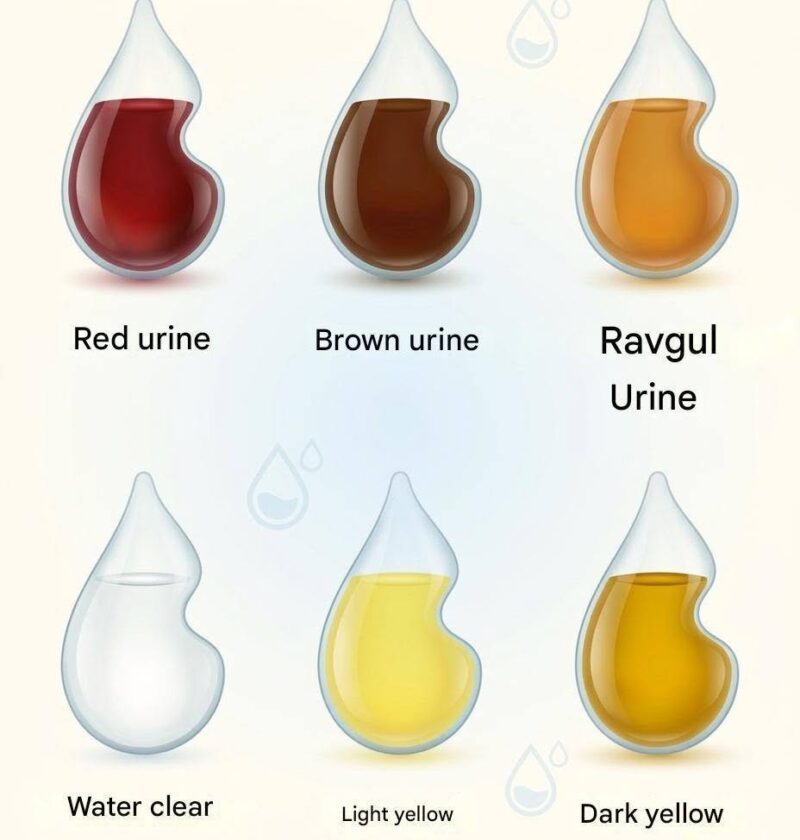
Urine color can offer clues about your hydration and, sometimes, your health. While temporary color changes are often harmless, some can indicate a medical condition that should be evaluated.
Here’s what different colors may mean:
| Urine Color | What It May Mean |
|---|---|
| Clear | You may be very well hydrated or drinking more water than your body needs. |
| Pale yellow to light gold | This is generally considered normal and reflects good hydration. |
| Dark yellow or amber | Often a sign of dehydration. Drinking more fluids usually lightens the color. |
| Orange | Can result from dehydration, certain medications, vitamins (especially B vitamins), or, less commonly, liver or bile duct problems. |
| Pink or red | May be caused by foods like beets, blackberries, or rhubarb. It can also indicate blood in the urine, which may result from a urinary tract infection, kidney stones, kidney disease, or other conditions and should be evaluated if unexplained. |
| Brown or tea-colored | May occur with severe dehydration, certain medications, muscle injury, liver disease, or blood in the urine. Medical evaluation is recommended if it persists. |
| Blue or green | Rare. It can be caused by certain medications, food dyes, or, less commonly, some medical conditions or infections. |
| Cloudy or milky | May be due to urinary tract infections, kidney stones, or excess minerals in the urine. If accompanied by pain, fever, or burning, see a healthcare provider. |
When to seek medical care
You should contact a healthcare provider if:
- Your urine is red or brown and you haven’t eaten foods or taken medications that could explain the color.
- The unusual color lasts for more than a day or two.
- You notice blood in your urine.
- You have symptoms such as pain when urinating, fever, back or side pain, swelling, or difficulty urinating.
- Your urine becomes very dark along with yellowing of the skin or eyes.
Keep in mind
Urine color is only one piece of the picture. Diet, hydration, supplements, and medications can all affect its appearance. If you’re concerned about a persistent change, especially if it’s accompanied by other symptoms, it’s a good idea to have it checked by a healthcare professional.