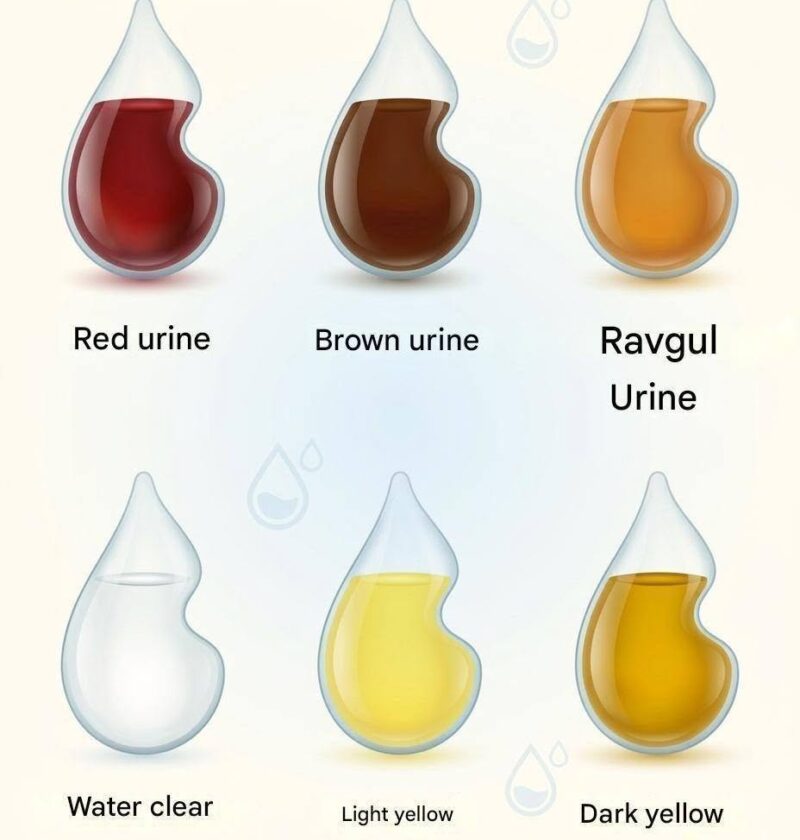
What Does the Color of Your Urine Say About Your Health?
Urine color can provide clues about your hydration status and sometimes signal possible health issues. However, color alone cannot diagnose a condition—other symptoms, medications, diet, and medical history all matter.
Common Urine Colors and What They May Mean
1. Clear or very pale urine
Possible meaning:
- You may be drinking a lot of fluids.
- In some cases, consistently colorless urine may suggest excessive fluid intake.
Tip: Aim for hydration without forcing excessive amounts of water.
2. Light yellow urine
Usually normal
- Often indicates good hydration.
- This is a common healthy urine color.
3. Dark yellow or amber urine
Possible causes:
- Not drinking enough fluids
- Sweating heavily
- Dehydration after exercise or illness
What may help:
- Increase fluid intake and monitor whether the color becomes lighter.
4. Orange urine
Possible causes:
- Dehydration
- Certain medications or supplements
- Foods with strong pigments
If orange urine persists or occurs with pale stools or yellowing of the skin/eyes, medical evaluation is important.
5. Pink or red urine
Possible causes:
- Blood in the urine (hematuria)
- Certain foods, such as beets
- Some medications
Blood in urine should generally be checked, especially if it is unexplained